
 Pin It
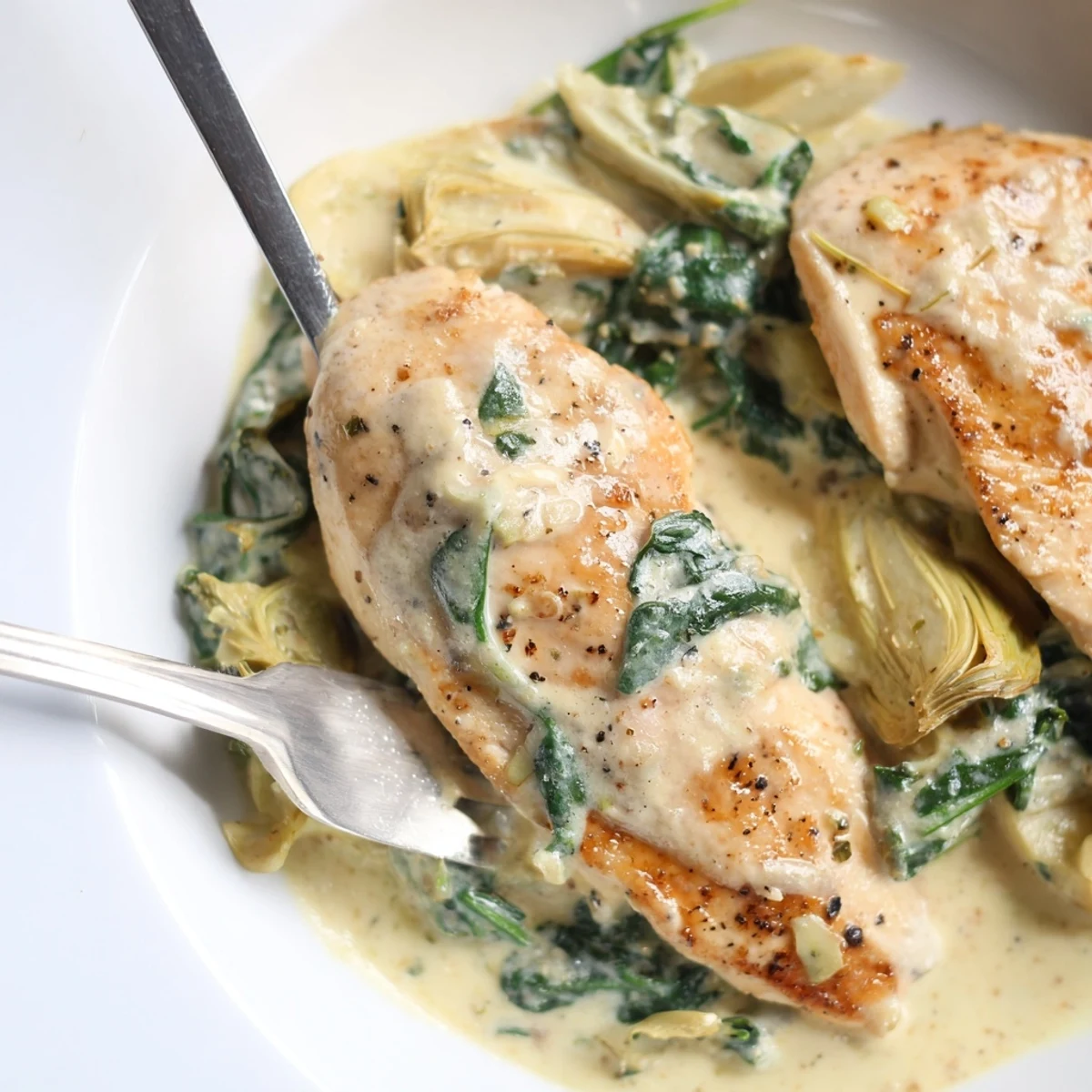
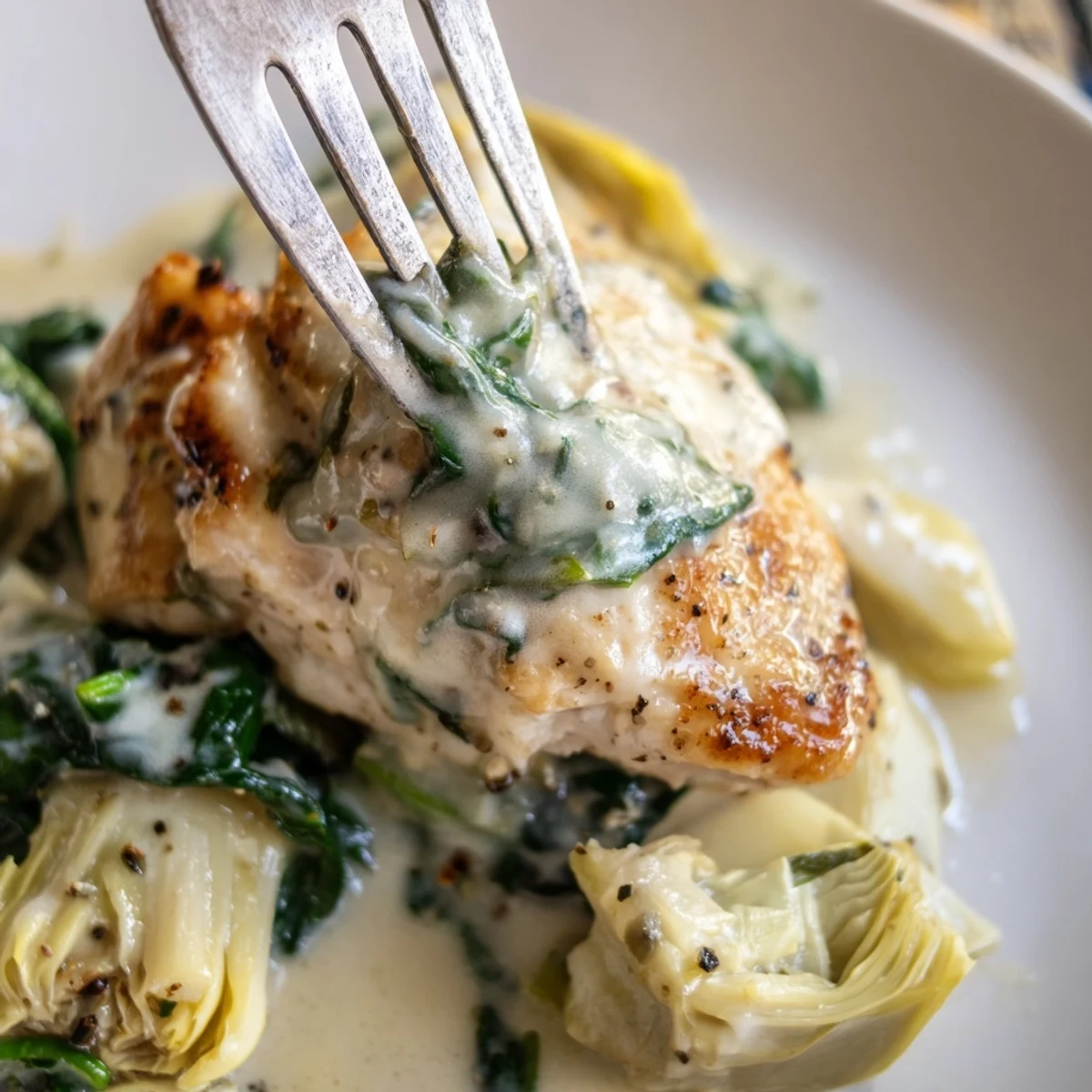
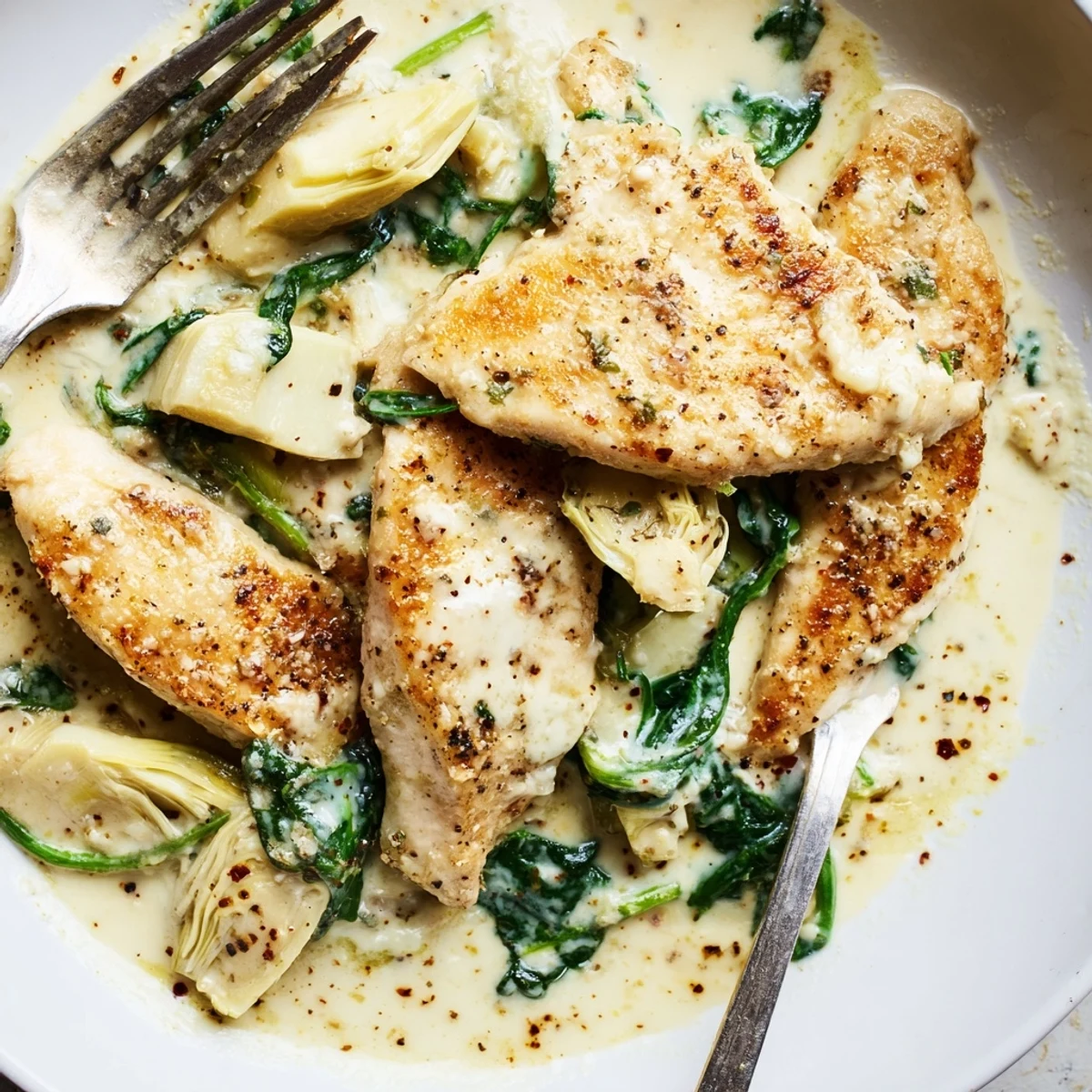
 This skillet features tender chicken breasts simmered gently in a creamy garlic sauce enriched with fresh spinach and artichoke hearts. The combination creates a comforting, flavorful dish perfect for a quick weeknight meal. Aromatic garlic and parmesan add depth while Italian seasoning and optional red pepper flakes bring warmth and complexity. Simply sear the chicken, sauté vegetables, then combine with cream and broth to finish this dish in under 40 minutes, resulting in a satisfying low-carb, gluten-free option.
There's something about a skillet that brings out the best in simple ingredients. One quiet Tuesday evening, I was rummaging through the fridge and found a container of artichoke hearts that had been patiently waiting, along with a bunch of spinach that was nearing its final days. I decided to build something around them, and this creamy chicken skillet was born—it became the dish I'd make whenever I needed comfort without the fuss.
I remember making this for my sister the first time she visited after moving away, and how she kept sneaking extra spoonfuls of sauce onto her plate when she thought I wasn't looking. That small moment of watching someone genuinely enjoy something I made—it stuck with me, and now I find myself reaching for this recipe whenever I want to feed people I care about something that feels both easy and special.
Ingredients
- Boneless, skinless chicken breasts: These cook quickly and stay moist when you don't overcook them, which happens faster than you'd expect once the sauce is involved.
- Kosher salt and freshly ground black pepper: Don't skip the fresh cracking—it makes a real difference in how the chicken tastes before it even hits the pan.
- Olive oil: Just enough to create a golden crust on the chicken without making the dish feel greasy.
- Garlic: Minced fresh, because jarred just doesn't have the same punch, especially in something this quick.
- Fresh baby spinach: It wilts down dramatically, so don't be alarmed by how much you're putting in the skillet.
- Canned artichoke hearts: Drained and quartered, they're convenient and honestly just as good as fresh for this purpose.
- Heavy cream: This is where the magic lives, but you can substitute half-and-half if you want something lighter without sacrificing creaminess.
- Low-sodium chicken broth: It balances the richness and keeps the sauce from becoming one-note.
- Grated Parmesan cheese: Freshly grated melts better than the pre-grated kind, and it adds a subtle sharpness that elevates everything.
- Dried Italian seasoning: A shortcut that works beautifully here, bringing herbal notes without fussing with fresh herbs.
- Crushed red pepper flakes: Optional, but that tiny heat at the end wakes up your palate in the best way.
Instructions
- Season and sear the chicken:
- Pat your chicken dry with paper towels first—this helps the seasoning stick and gives you a better golden crust. Once the oil is shimmering and almost smoking, the chicken should hit the pan with a satisfying sizzle.
- Build the sauce base:
- That moment when the garlic hits the hot pan and the kitchen suddenly smells incredible? That's when you know you're on the right track. Keep stirring so it doesn't brown too fast.
- Wilt the spinach:
- Watch it transform from a towering pile to something that barely covers the bottom of the pan in seconds. This is where fresh spinach really shows off.
- Introduce the vegetables:
- The artichoke hearts warm through and absorb the garlic flavor, becoming even more tender than they were straight from the can.
- Create the creamy sauce:
- Pour slowly and stir constantly so everything emulsifies smoothly. You'll see the cream and broth start to marry, and then the Parmesan transforms it into something silky.
- Meld everything together:
- Return the chicken to the skillet and let it nestle into the sauce for those final minutes, soaking up all the flavors you've built. Spoon that sauce over the top repeatedly—it's not just for flavor, it's almost meditative.
 Pin It
 I've learned that this dish has a quiet power. It's the kind of meal that turns an ordinary weeknight into something you remember, not because it's fancy, but because it tastes like someone took care in making it.
Why This Skillet Works
The beauty of cooking chicken and vegetables in the same pan is that their flavors build on each other. The chicken releases its juices as it cooks, those juices mingle with the garlic and cream, and by the time everything comes together, you've created something far richer than the sum of its parts. It's efficient but doesn't feel rushed, which is exactly what weeknight cooking should be.
Serving and Pairing Ideas
This skillet is flexible in the best way. Serve it over cauliflower rice and it's perfectly suited to low-carb eating, or spoon it over egg noodles or regular pasta if you want something more traditional. I've also served it alongside roasted broccoli, which picks up the sauce beautifully, or simply with crusty bread for soaking up every last drop.
Simple Variations to Try
Once you've made this a few times, you'll start seeing it as a template. Sun-dried tomatoes stirred in at the end add a sweet-tart note that's unexpectedly perfect. Fresh mushrooms, gently sautéed before the spinach, add earthiness. Even a handful of crispy bacon crumbled over the top transforms it into something different, though honestly it's perfect just as it is.
- Roasted red peppers bring sweetness and color if you have them on hand.
- A splash of dry white wine added to the sauce before the cream deepens the flavor if you're in the mood for that complexity.
- Finish with fresh lemon zest if the sauce ever feels too rich for your taste.
 Pin It
 This is the kind of recipe that settles into your regular rotation and quietly becomes something you're known for. It's nourishing, it's quick, and it tastes like care.
Recipe Questions & Answers
- → What’s the best type of chicken to use?
-
Boneless, skinless chicken breasts work best for even cooking and tender texture in this skillet dish.
- → Can I substitute heavy cream with something lighter?
-
Half-and-half can be used as a lighter alternative, though the sauce will be slightly less rich.
- → How do I prevent the sauce from breaking?
-
Simmer gently and stir frequently after adding cream and cheese to keep the sauce smooth and creamy.
- → What can I serve alongside this dish?
-
Try pairing with cauliflower rice for a low-carb option or pasta for a more filling meal.
- → Are there any common allergens to be aware of?
-
This dish contains dairy from cream and Parmesan cheese and may have potential egg cross-contact in the cheese.