
 Pin It
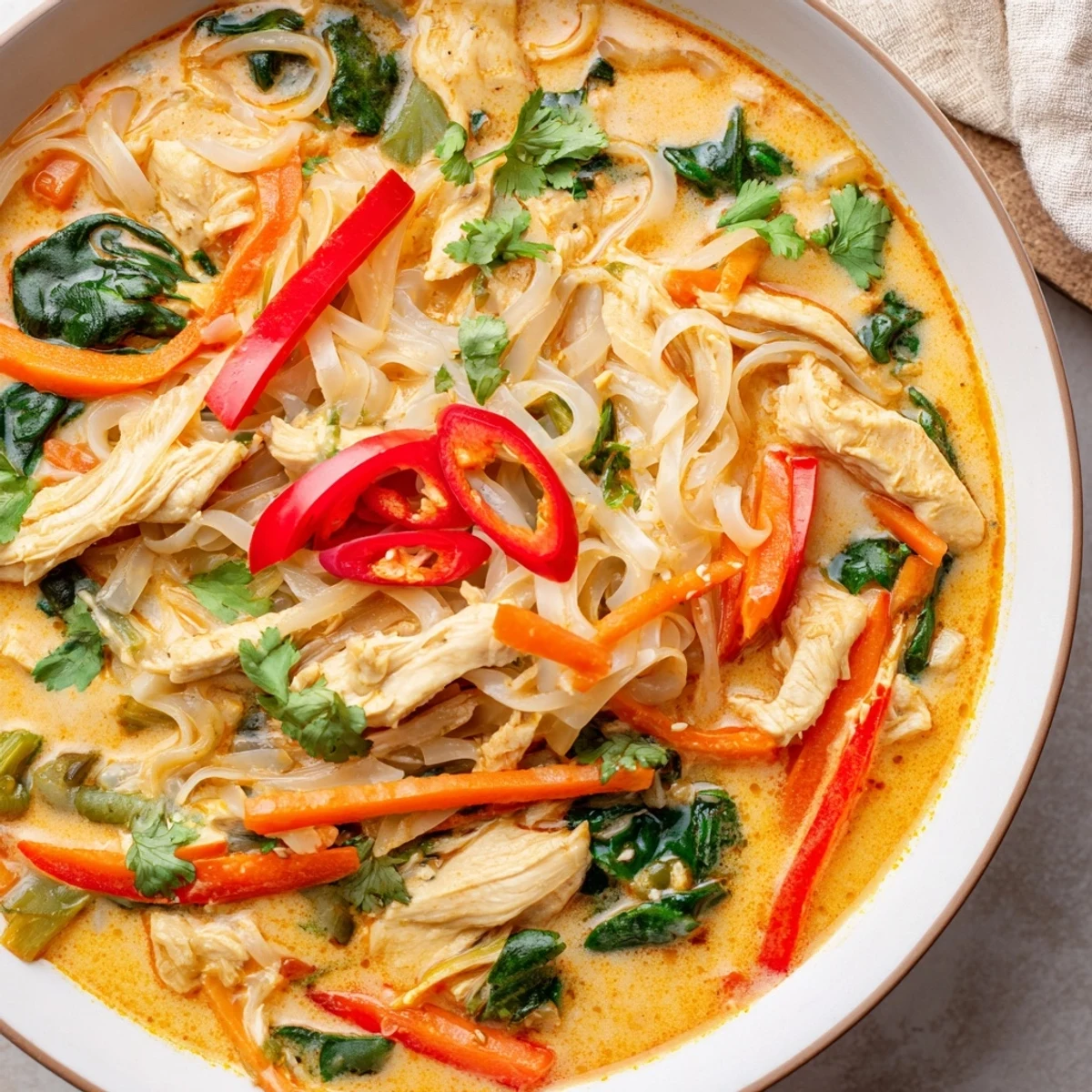
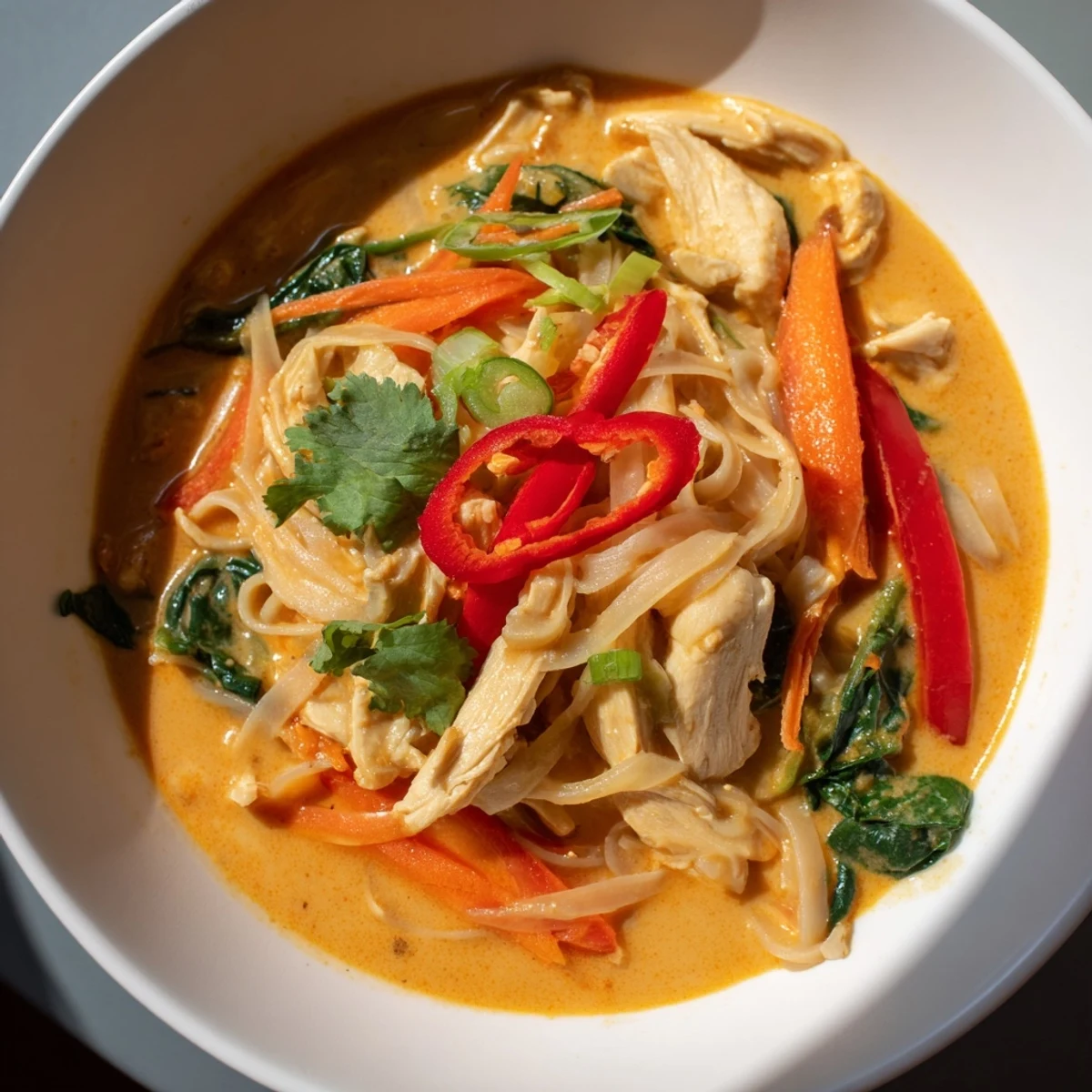
 This flavorful Thai red curry noodle soup brings together tender chicken, delicate rice noodles, and crisp vegetables in a rich, aromatic coconut broth. Begin by preparing the noodles and sautéing red curry paste with ginger and garlic. Add sliced chicken and cook until opaque, then pour in coconut milk and chicken broth. Simmer with fish sauce and brown sugar. Introduce bell pepper and carrots, cooking until tender, before stirring in spinach and lime juice. Serve the hot, spicy broth over noodles, garnished with spring onions and cilantro for a complete, satisfying meal.
The aroma of lemongrass and chili always transports me back to bustling street food stalls in Thailand, a place I've only ever visited in my dreams. This red curry noodle soup became my way of bringing those vibrant flavors home. I remember one blustery autumn evening, feeling a bit adrift, deciding to try my hand at something truly exotic. The kitchen warmed immediately, not just from the stove, but from the promise of something wonderful bubbling on the hob.
There was a time I made this for a small gathering of friends, a casual potluck where everyone was meant to bring something. I remember the clatter of forks as they eagerly dipped into their bowls, followed by contented sighs around the table. My friend, Leo, who usually shies away from anything spicy, kept going back for more, declaring it "dangerously delicious."
Ingredients
- Chicken Breasts or Thighs: Thighs tend to stay juicier and absorb flavors beautifully, making this soup extra tender.
- Rice Noodles: Medium thickness is ideal here; they're substantial enough to slurp up the broth without becoming mushy.
- Red Bell Pepper: Its sweet crunch and vibrant color add both flavor and visual appeal to the hearty soup.
- Carrot: Julienne these thinly so they cook quickly and add a subtle sweetness and lovely texture.
- Baby Spinach: Stirred in at the very end, it wilts perfectly, adding a fresh, green lightness to the rich broth.
- Spring Onions: These provide a mild, fresh oniony bite, making them a perfect garnish for that final pop of flavor.
- Fresh Cilantro: Essential for its bright, herbaceous notes; don't skip this to truly elevate the Thai flavors.
- Vegetable Oil: A neutral oil is best here to help bloom the curry paste and aromatics without imparting its own flavor.
- Thai Red Curry Paste: This is the heart of your soup; choose a good quality paste that you love for authentic depth.
- Coconut Milk: The creamy backbone that balances the spice and gives the soup its luxurious, comforting texture.
- Chicken Broth: Provides the savory liquid base, adding significant depth of flavor to the curry.
- Fish Sauce: Don't be deterred by the smell; it's crucial for adding that irresistible umami and salty depth typical of Thai cuisine.
- Brown Sugar: Just a touch of sweetness is needed to balance the spicy, salty, and sour elements, creating a harmonious flavor profile.
- Fresh Ginger: Grate it finely for its aromatic warmth and a subtle peppery zest that permeates the entire dish.
- Garlic Cloves: Minced garlic creates a fundamental aromatic base, essential for layering complex flavors.
- Lime Juice: A final squeeze at the end brightens all the flavors, adding a necessary tangy zing to cut through the richness.
- Fresh Red Chili: (Optional) For those who crave an extra kick of heat and a beautiful splash of color as a garnish.
- Lime Wedges: (Optional) Offer these on the side for guests to add an additional burst of citrusy freshness to their bowl.
- Extra Cilantro Leaves: (Optional) A generous sprinkle as a garnish enhances the freshness and visual appeal, bringing everything together.
Instructions
- Get Your Noodles Ready:
- Cook the rice noodles as directed on their package, then quickly drain and rinse them under cold water. This stops them from cooking further and prevents them from sticking together.
- Awaken the Aromatics:
- Heat the vegetable oil in your pot over medium heat. Add the red curry paste, grated ginger, and minced garlic, stirring for about a minute or two until the incredible fragrance fills your kitchen.
- Sear the Chicken:
- Add your thinly sliced chicken to the pot, letting it cook for 3-4 minutes. Stir it occasionally until it just begins to turn opaque, sealing in its juices.
- Simmer the Broth:
- Pour in the creamy coconut milk and savory chicken broth. Stir in the fish sauce and brown sugar, then bring the mixture to a gentle, steady simmer.
- Add the Veggies:
- Introduce the vibrant bell pepper and julienned carrot to the simmering broth. Let everything cook together for 5-7 minutes, ensuring the chicken is thoroughly cooked and the vegetables are tender-crisp.
- Green Freshness:
- Stir in the baby spinach, cooking for just one minute until it beautifully wilts into the soup. Finish with a bright squeeze of lime juice and the fresh chopped cilantro.
- Assemble Your Bowls:
- Divide the perfectly cooked and rinsed noodles among individual serving bowls. Generously ladle the hot, aromatic curry soup over them.
- Garnish and Serve:
- Top each bowl with sliced spring onions and any other desired garnishes like extra cilantro or fresh chili. Serve this comforting, vibrant soup immediately.
 Pin It
 One quiet evening, after a particularly grueling week, I found myself making this soup purely for myself. It was one of those moments where the act of cooking felt like therapy, the rhythmic chopping and stirring a soothing meditation. Sitting down with that steaming bowl, watching the rain outside, felt like a warm, culinary hug. It wasn't just dinner; it was self-care in a bowl.
The Magic of Curry Paste
I learned early on that not all curry pastes are created equal. Some are incredibly spicy, while others are milder and more aromatic. Don't be afraid to smell it and even taste a tiny bit raw if you're feeling brave, just to get a sense of its intensity before adding it to your pot. It's the cornerstone of this dish, so choosing one you love makes all the difference.
Building Layers of Flavor
When you first sauté the curry paste with ginger and garlic, you're "blooming" the spices. This step is non-negotiable; it releases their full aromatic potential and creates a deeply flavorful base that permeates the entire soup. Rushing this initial phase means missing out on a world of vibrant taste.
Customizing Your Bowl
This recipe is a fantastic canvas for whatever vegetables you have on hand or prefer. I've often thrown in mushrooms, snap peas, or even some leftover broccoli florets. It's truly forgiving and encourages creativity.
- For a vegetarian twist, tofu is an excellent protein swap.
- Spice levels are entirely up to you; add more paste for heat, or a little less for a milder experience.
- Don't forget the fresh herbs and lime at the end; they wake up all the flavors.
 Pin It
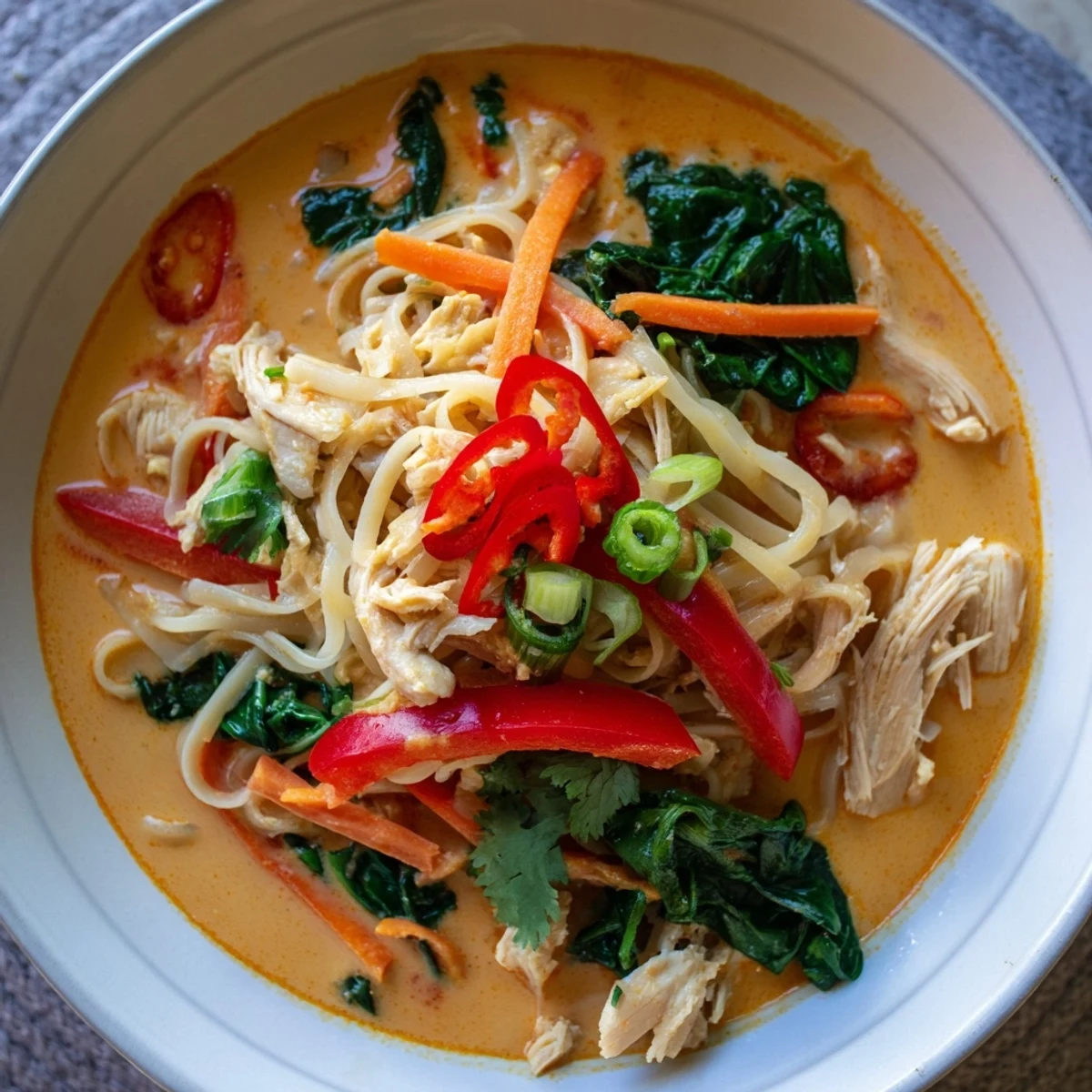
 This Thai Red Curry Noodle Soup isn't just a meal; it's an experience, a journey of flavor that comforts and invigorates. I hope it brings as much warmth and joy to your kitchen as it has to mine.
Recipe Questions & Answers
- → How can I make this vegetarian?
-
To adapt this dish for vegetarians, simply substitute the chicken with firm tofu, cut into cubes or slices. Ensure you also use a high-quality vegetable broth instead of chicken broth. The rest of the ingredients and cooking method remain largely the same, delivering a delicious meat-free meal.
- → Can I adjust the spice level?
-
Yes, the spice level is easily customizable. For a milder soup, start with less Thai red curry paste and add more to taste. If you prefer more heat, you can increase the amount of paste or add fresh sliced chilies as a garnish at the end.
- → What other vegetables can I include?
-
This versatile soup welcomes a variety of vegetables. Consider adding sliced mushrooms, snow peas, baby corn, or bamboo shoots during the simmering stage with the bell pepper and carrots. Fresh broccoli florets or bok choy can also be stirred in towards the end of cooking.
- → How should I store leftovers?
-
Leftovers can be stored in an airtight container in the refrigerator for up to 3-4 days. It's often best to store the noodles separately from the soup broth if possible, as they can absorb a lot of liquid and become mushy. Reheat gently on the stovetop or in the microwave.
- → What kind of noodles work best?
-
Medium-thickness rice noodles are recommended for their texture and ability to absorb the rich broth. However, you can also use wider rice noodles (like pho noodles), thin rice vermicelli, or even egg noodles if you prefer a different consistency. Always follow package instructions for preparation.
- → Can I make this ahead of time?
-
The soup base can be prepared a day in advance and stored in the refrigerator. When ready to serve, reheat the broth, cook fresh noodles, and assemble. This helps maintain the best texture for the noodles and ensures a fresh-tasting meal.