
 Pin It
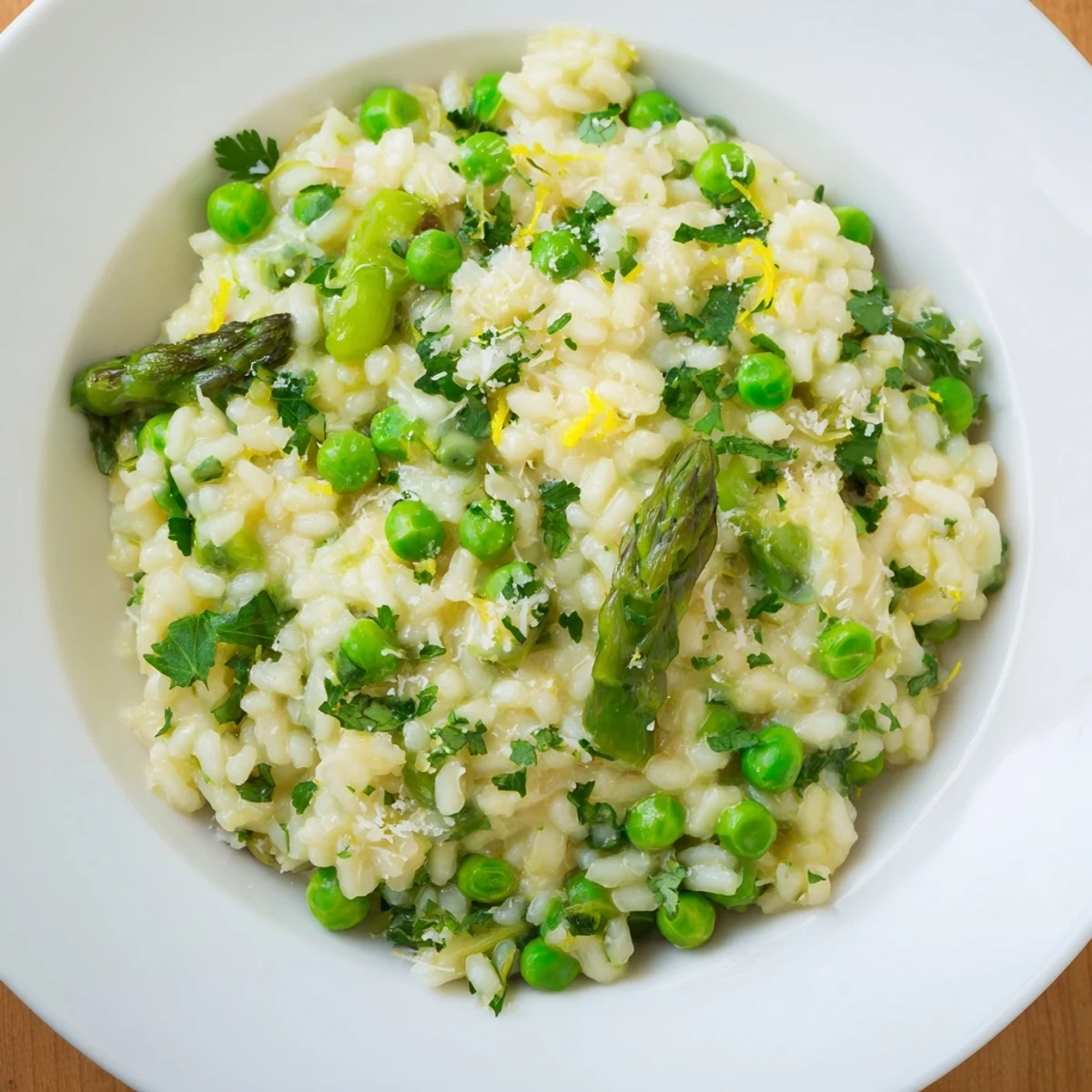
 This creamy, vibrant risotto combines tender asparagus and sweet spring peas for a delightful spring-inspired dish. Arborio rice is slowly cooked with white wine and warm vegetable broth, creating a rich, velvety texture. Fresh lemon zest and Parmesan cheese add brightness and depth, while butter enriches the flavor. This dish suits vegetarian and gluten-free diets when using appropriate broth. Garnished with fresh parsley, it offers a fresh and satisfying meal that balances creaminess with delicate vegetable notes.
Last April, my friend Sarah came over with a bag of fresh peas from her fathers garden and a bundle of asparagus she'd picked up at the farmers market. We stood in my tiny kitchen, shelling peas and snapping asparagus spears, catching up on life while wine glasses sat neglected on the counter. That impromptu cooking session turned into this risotto, and I've made it every spring since.
I made this for my parents on their anniversary one year, timing the cooking so we could all stand around the pot, taking turns stirring. My dad, who usually avoids complicated dishes, stood there the longest, adding broth ladle by ladle and watching the rice transform into something creamy and luxurious. Now he requests it every time he visits.
Ingredients
- 1 cup fresh or frozen spring peas: Fresh peas need brief blanching, frozen go straight in at the end
- 1 bunch asparagus: Cut into 1 inch pieces, using the tender tops and mid sections
- 1 small yellow onion, finely diced: The foundation that builds depth without overwhelming delicate flavors
- 2 cloves garlic, minced: Add it after the onion so it does not burn or turn bitter
- Zest of 1 lemon: This bright ingredient cuts through the richness perfectly
- 1 1/2 cups arborio rice: Short grain rice releases starch slowly, creating that signature creaminess
- 4 cups vegetable broth, kept warm: Cold broth shocks the rice and interrupts the cooking process
- 1/2 cup dry white wine: Any crisp white works, even what you are drinking
- 3 tablespoons unsalted butter, divided: One tablespoon starts the rice, two finish it
- 1/2 cup freshly grated Parmesan cheese: Buy a wedge and grate it yourself for best melting
- 2 tablespoons heavy cream: Optional, but makes it restaurant luxurious
- 2 tablespoons extra virgin olive oil: Helps prevent the butter from burning
- Salt and freshly ground black pepper: Taste at the end, broths vary in saltiness
Instructions
- Build your flavor foundation:
- Heat olive oil and 1 tablespoon butter in a large saucepan over medium heat until butter foams, then add diced onion and cook until translucent, about 3 minutes. Stir in minced garlic and cook just 30 seconds until fragrant, watching carefully so it does not brown.
- Toast your rice:
- Add arborio rice to the pan and stir constantly for 2 minutes until grains look slightly translucent at edges and smell nutty. This coating step prevents the rice from becoming gummy later.
- Deglaze with wine:
- Pour in white wine and stir until completely absorbed, scraping up any browned bits from the bottom of the pan. The smell of alcohol should cook off completely.
- Begin the broth ritual:
- Add warm vegetable broth one ladle at a time, stirring frequently and waiting until each addition is almost absorbed before adding more. This slow process releases starch and creates that creamy texture.
- Add asparagus at the right moment:
- About 10 minutes into cooking, add asparagus pieces to the risotto, continuing the broth ladling and stirring process. The asparagus will cook in the rice, becoming tender but still holding its shape.
- Finish with vibrant touches:
- When rice is tender but still has a slight bite, stir in peas, lemon zest, remaining butter, Parmesan, and optional cream. Cook 2 to 3 minutes more until peas are bright green and everything is heated through.
- Rest before serving:
- Season with salt and pepper, remove from heat, cover and let rest 2 minutes. This brief rest allows the risotto to settle and become perfectly creamy.
 Pin It
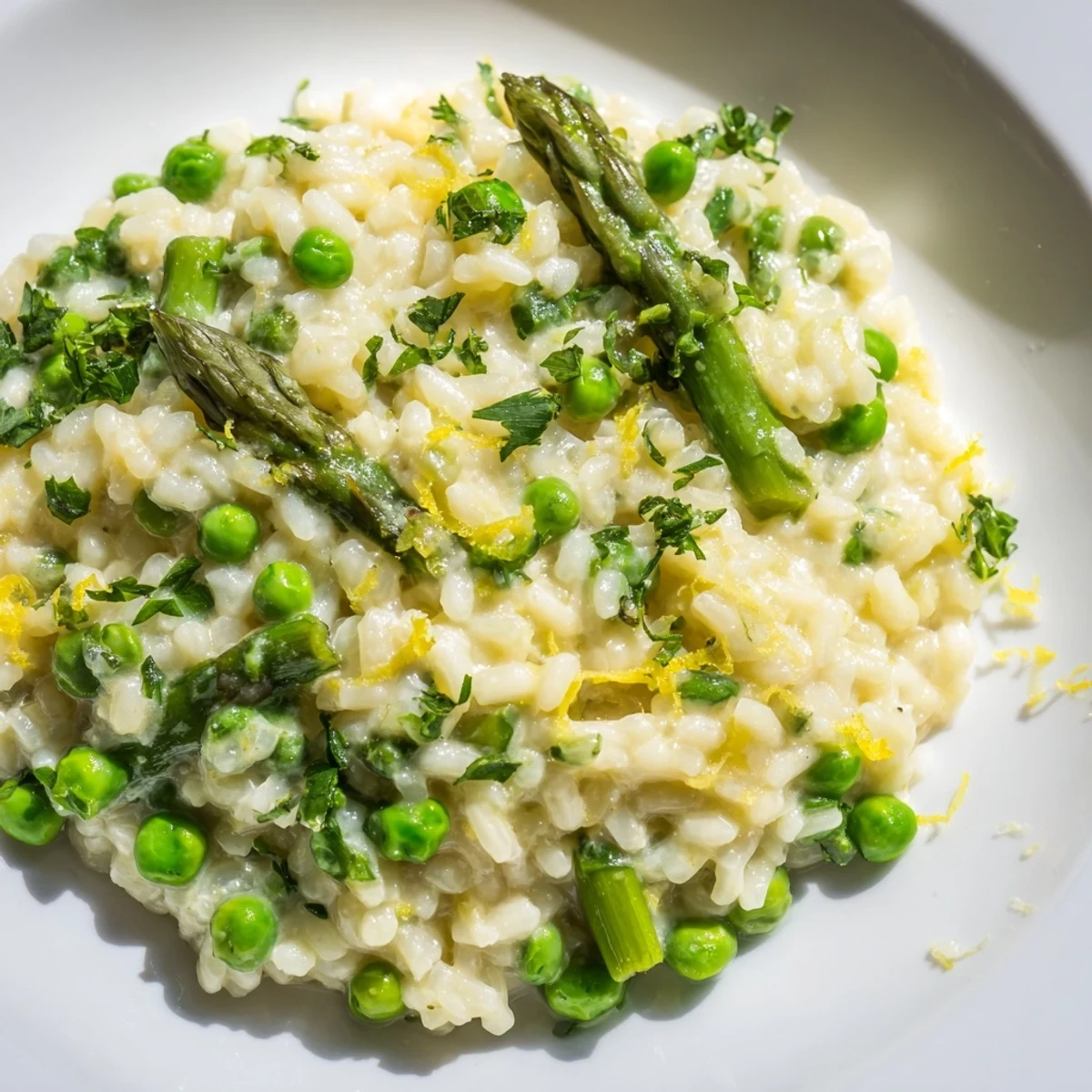
 This recipe has become my go to for spring dinner parties because it feels indulgent but leaves everyone feeling satisfied without heavy. Last month, my friend who swore she hated risotto went back for thirds and asked for the recipe before she even left the table.
Making It Your Own
Swap asparagus for fava beans or sugar snap peas when they are in season. Sometimes I add a handful of fresh mint or basil at the very end for an unexpected bright note that wakes everything up.
Wine Pairing
A crisp Pinot Grigio or Sauvignon Blanc complements the creaminess without overwhelming the delicate vegetables. The same wine you cook with works beautifully at the table, creating a seamless experience from start to finish.
Timing Your Vegetables
Asparagus needs about 10 minutes in the risotto to become tender, while peas only need 2 to 3 minutes. Adding vegetables at different stages keeps everything perfectly cooked instead of ending up with mushy peas or crunchy asparagus.
- Keep your broth warm in a separate pot on low heat
- Grate extra Parmesan for serving at the table
- Have all ingredients prepped before you start cooking
 Pin It
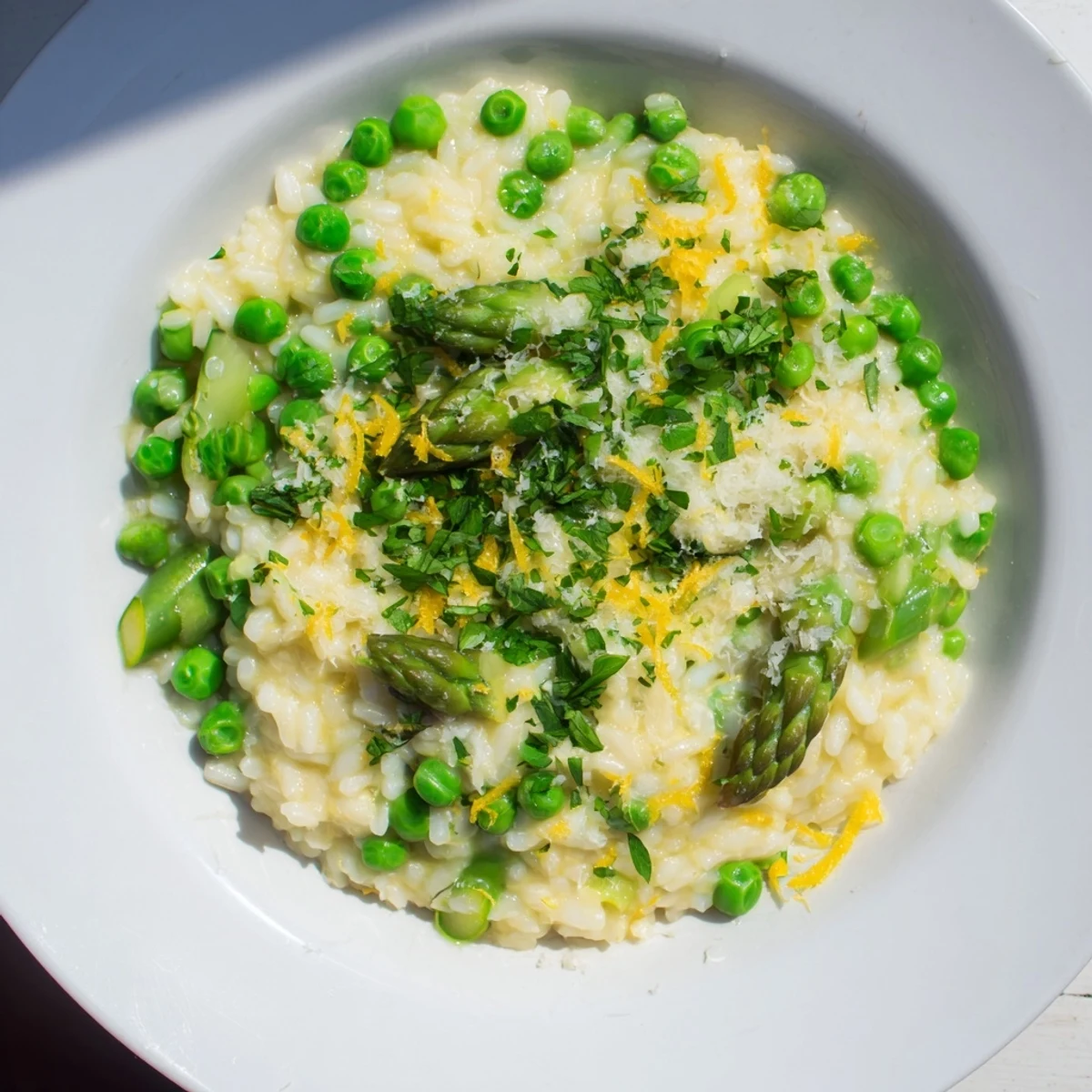
 There is something deeply satisfying about the rhythm of risotto, the way it demands your presence and attention. Spring arrives in bowls like this, simple and beautiful and worth every minute.
Recipe Questions & Answers
- → Can I use frozen peas instead of fresh?
-
Yes, frozen peas work well and are added at the end to retain their bright color and sweet flavor.
- → How do I know when the risotto is done?
-
The rice should be tender yet slightly firm to the bite, with a creamy consistency.
- → Can I prepare this dish vegan?
-
Use plant-based butter and replace Parmesan with a vegan alternative for a dairy-free option.
- → What wine pairs best with this dish?
-
A crisp white wine like Pinot Grigio or Sauvignon Blanc complements the flavors nicely.
- → Can I add other herbs to this dish?
-
Fresh mint or parsley enhance the spring flavors and add aromatic freshness.
- → Is it necessary to stir constantly during cooking?
-
Frequent stirring helps release the rice starches, creating the creamy texture characteristic of risotto.