
 Pin It
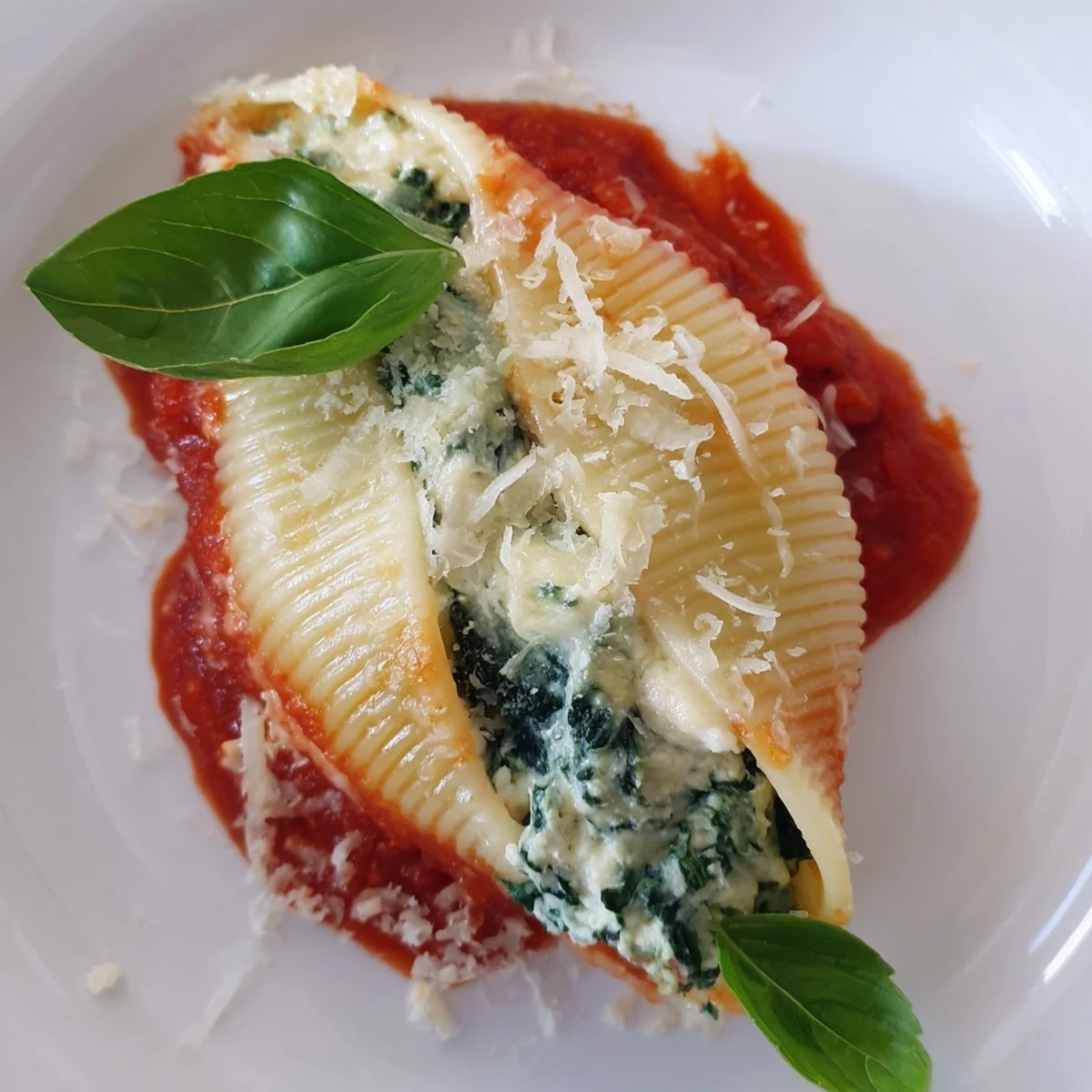
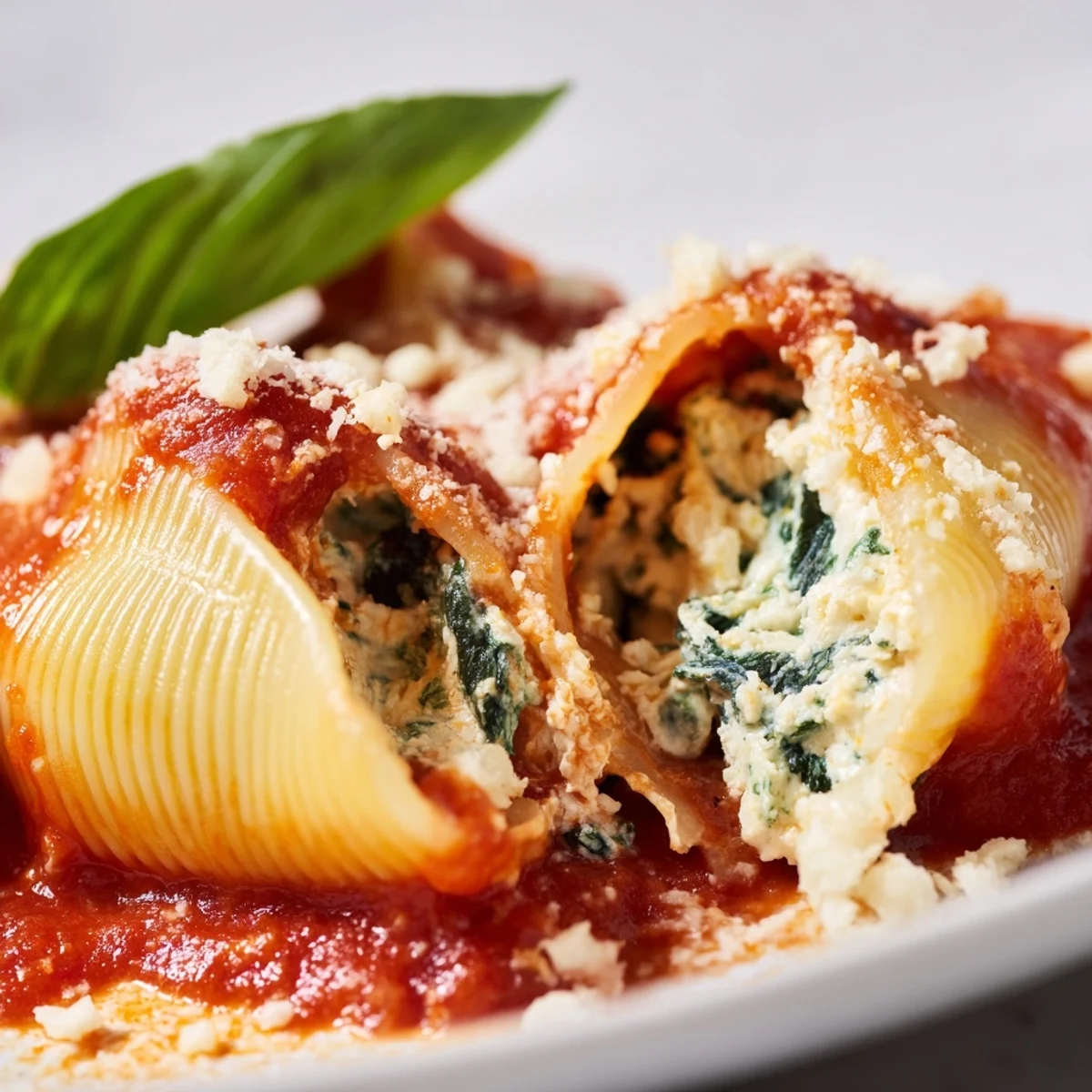
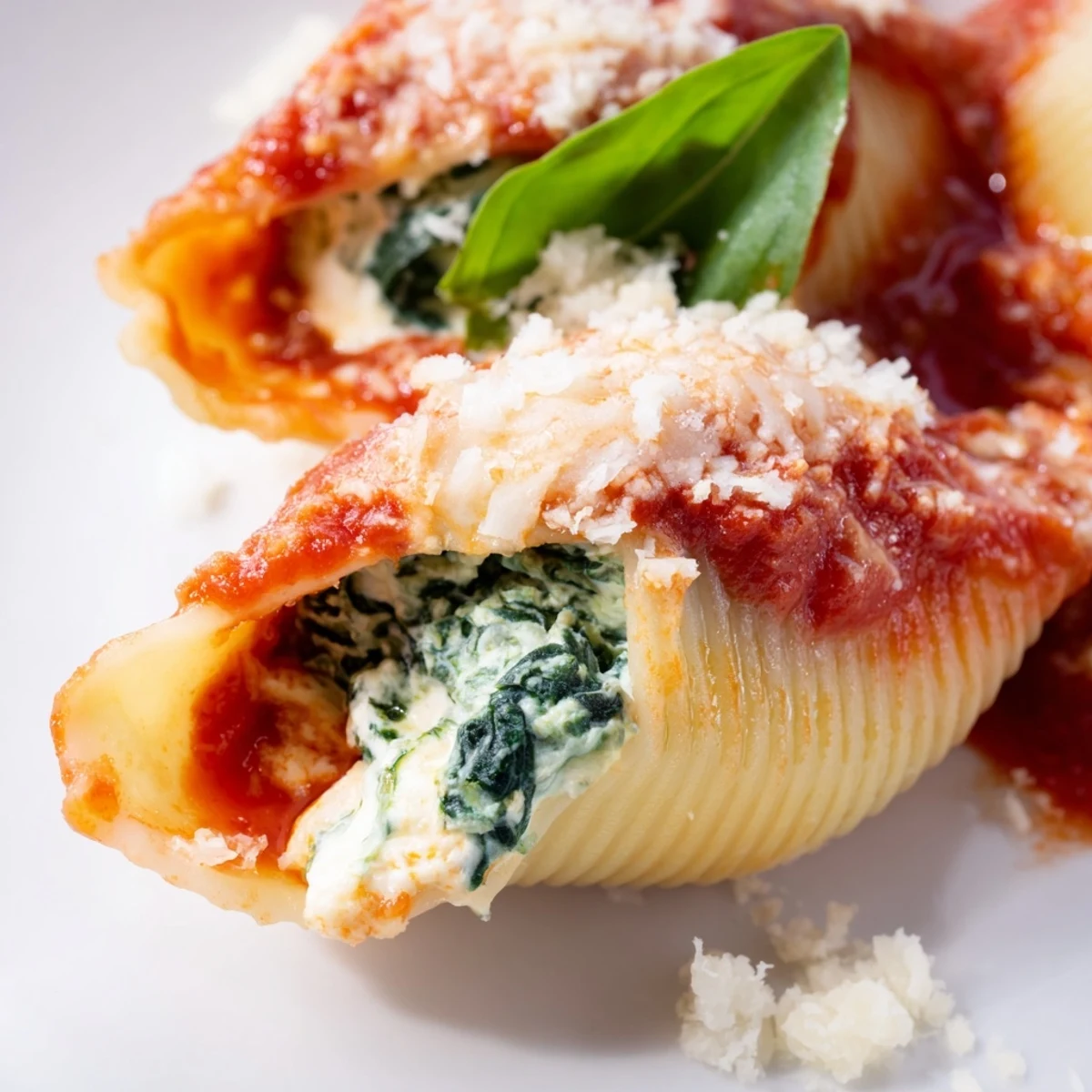
 This dish features large conchiglie pasta shells generously filled with a creamy mixture of ricotta, fresh spinach, Parmesan, and subtle spices. Covered in a rich tomato passata sauce and topped with mozzarella and extra Parmesan, the shells bake until bubbly and golden. The spinach is wilted to capture its flavor and moisture is squeezed out to keep the filling perfect. Garnished with fresh basil for a fragrant finish, this Italian-inspired meal suits a comforting, satisfying dinner option with a vegetarian focus.
There's something about watching a jumbo pasta shell fill with creamy ricotta and spinach that feels like you're packing tiny edible treasures. I discovered this dish on a rainy Sunday when I had a bag of frozen spinach and ricotta in the fridge, and honestly, I just wanted something warm and substantial that didn't involve heating up the whole house. The shells transformed into little boats of comfort, and my kitchen smelled like garlic, tomato, and nutmeg in the best possible way. That first bite—cheesy, earthy, with that subtle warmth from the nutmeg—made me realize I'd stumbled onto something I'd be making again and again.
I made this for my neighbor's dinner party last spring, and watching everyone carefully extract a perfectly filled shell from the baking dish, with that molten cheese catching the light, felt like vindication after years of intimidation around Italian cooking. Someone asked if I'd made the pasta from scratch, and I just smiled and let them believe what they wanted to believe.
Ingredients
- Jumbo conchiglie shells (250 g): These are your edible vessels, and you want them just shy of fully cooked so they hold their shape and don't turn mushy in the oven.
- Fresh spinach (400 g) or frozen thawed (250 g): Fresh wilts down dramatically, which always surprises people—you start with what looks like a sink full and end up with a handful of tender greens.
- Ricotta cheese (250 g): This is your creamy base, and it's worth getting the good stuff because it actually tastes like something.
- Grated Parmesan cheese (60 g for filling, 20 g for topping): Don't use the pre-grated stuff with anti-caking powder if you can help it—the texture and meltability make a real difference.
- Large egg (1): This binds everything together and makes the filling set up beautifully without being dense.
- Garlic clove (1, minced): One clove in the filling is gentle and just whispers garlic without overwhelming the delicate spinach.
- Ground nutmeg (1/4 tsp): This is the secret weapon that elevates the whole dish and makes people ask what makes it taste so good.
- Olive oil (1 tbsp): Use it for the sauce base and you'll get a silky depth that butter can't quite match.
- Small onion (1, finely chopped) and garlic cloves (2, minced): These form the aromatic foundation of your sauce, sweet and mellow after sautéing.
- Passata (700 ml): This is sieved tomatoes—smoother and more refined than crushed tomatoes, which is exactly what you want here.
- Dried oregano (1 tsp) and sugar (1 tsp): Oregano brings the Italian comfort, while a tiny pinch of sugar rounds out the tomato acidity naturally.
- Mozzarella cheese (60 g, grated) for topping: This creates that golden, bubbly top layer that's irresistible when the dish comes out of the oven.
- Salt and black pepper: Season as you go, not all at once at the end—it makes a difference.
Instructions
- Get your oven and pasta ready:
- Preheat the oven to 180°C and bring a large pot of salted water to a rolling boil. The pasta water should taste like the sea—this is your only chance to season the pasta itself.
- Cook the shells just right:
- Add the jumbo conchiglie and cook for about 2 minutes less than the package instructions suggest, so they're still slightly firm when you lift them out. This is crucial—they'll finish cooking in the oven and you want them tender but not falling apart.
- Prepare the spinach:
- While the pasta cooks, put the fresh spinach in a dry skillet and let it wilt down for 2-3 minutes, stirring occasionally—you'll watch it transform from a towering pile to something manageable. Once it's cooled slightly, squeeze out every bit of moisture you can, then chop it finely so it distributes evenly throughout the filling.
- Build the filling:
- In a bowl, combine the wilted spinach, ricotta, Parmesan, egg, minced garlic, nutmeg, salt, and pepper. Mix gently until everything is evenly distributed and the filling looks creamy and flecked with green.
- Make the tomato sauce:
- Heat olive oil in a saucepan and sauté the chopped onion until it's soft and just starting to turn golden, about 5 minutes. Add the minced garlic and cook for just 1 minute more—you want the aroma without burnt garlic bitterness.
- Simmer the sauce:
- Stir in the passata, oregano, sugar, salt, and pepper, then let it gently bubble for about 10 minutes, stirring occasionally. The sauce should taste balanced between acidity and sweetness, with the oregano melded in.
- Assemble in the baking dish:
- Spread half of your tomato sauce across the bottom of a large baking dish to create a cushion. Using a spoon or piping bag, fill each drained pasta shell with the ricotta mixture, then arrange them sauce-side-down in the dish.
- Top and cover:
- Pour the remaining sauce over the shells and sprinkle the mozzarella and extra Parmesan evenly over the top. Cover loosely with foil—you want the steam to circulate a bit.
- Bake low and slow, then finish:
- Bake covered for 25 minutes until the sauce is bubbling at the edges, then remove the foil and bake another 10 minutes until the cheese is golden and everything is heated through. You'll know it's ready when the cheese starts to brown slightly in spots.
 Pin It
 I made this for my mother-in-law once, and she ate three shells in complete silence before telling me this was the best thing I'd ever made in her presence. That moment—when food becomes a quiet kind of love language—is why I keep coming back to this recipe.
The Science of the Shells
Jumbo conchiglie exist in this sweet spot where they're sturdy enough to hold filling but concave enough to cradle it gently. The slight undercooking matters because the starch in the pasta is still set enough to hold its shape, and as it finishes cooking in the oven's humid environment, it becomes tender without dissolving into the sauce. This is the same principle that makes baked pasta dishes so different from a simple tossed pasta—everything softens and melds together in a way that feels deliberate and complete.
Why Ricotta Matters More Than You Think
Ricotta has this incredible ability to taste creamy and light at the same time, which is why it's the filling of choice for so many Italian dishes. It's not as dense as cream cheese, not as tangy as Greek yogurt, and not as austere as cottage cheese—it's the Goldilocks of soft cheeses. The egg binds it all together and gives the filling a subtle set without making it heavy or rubbery, which is a line you're walking by touch and taste as much as measurement.
Making This Dish Your Own
This recipe is built on a foundation strong enough to handle your experiments. Try swapping the spinach for kale or even sautéed mushrooms if you want something earthier, or stir sun-dried tomatoes into the filling for brightness and texture. The ricotta-nutmeg-egg base is flexible enough to become whatever you want it to be, as long as you respect the moisture-to-binding ratio. The sauce is also forgiving—you can add a splash of red wine, a pinch of red pepper flakes, or fresh basil leaves right into the sauce if you want different notes.
- Fresh herbs like basil or parsley stirred into the filling at the last moment add brightness without overpowering the delicate spice balance.
- A thin layer of béchamel over the filling before you top it with sauce and cheese adds richness and makes the whole dish more luxurious.
- If you make this ahead, cover it and refrigerate, then bake it straight from cold—just add 5-10 minutes to the cooking time.
 Pin It
 There's something deeply satisfying about a dish that asks you to slow down and fill pasta shells by hand, that rewards you with warm cheese and tender spinach and the smell of baking tomato sauce. This is not fancy cooking, but it is honest cooking, and there's no higher compliment I can give.
Recipe Questions & Answers
- → How do you prepare the spinach for the filling?
-
Wilt fresh spinach in a dry skillet for 2-3 minutes, then drain and squeeze out excess moisture before chopping finely.
- → Can frozen spinach be used instead of fresh?
-
Yes, thaw and thoroughly drain frozen spinach to remove excess water before mixing with the cheese filling.
- → What kind of pasta is ideal for stuffing?
-
Jumbo conchiglie pasta shells are perfect as their large size holds the filling well and bakes evenly.
- → How to ensure the filling stays creamy after baking?
-
Mix ricotta with Parmesan, egg, and spices well and avoid overcooking spinach to maintain moist, creamy texture inside the shells.
- → What can be used as a substitute for spinach?
-
Kale can be substituted for spinach, offering a different flavor and similar texture when wilted and drained.