
 Pin It
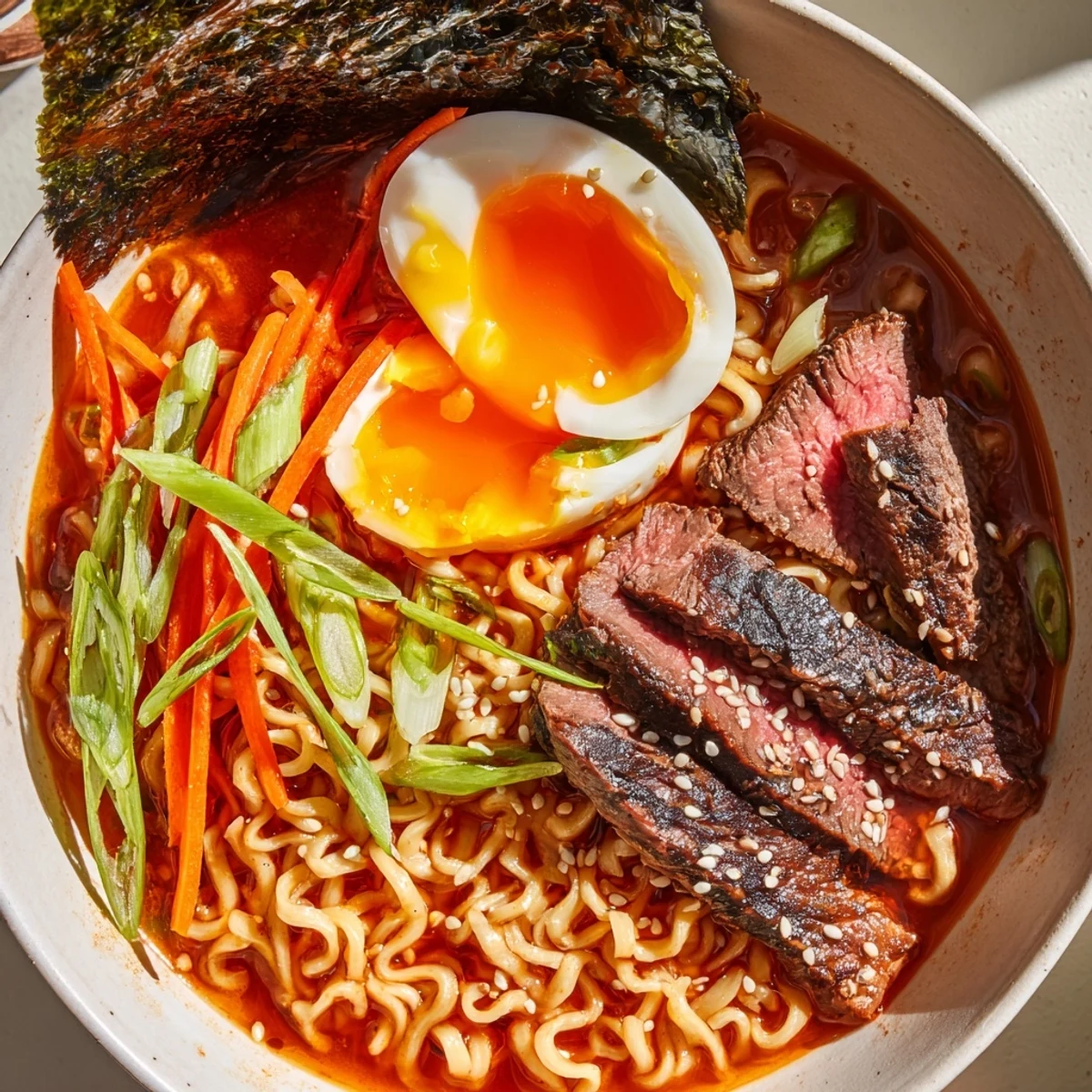
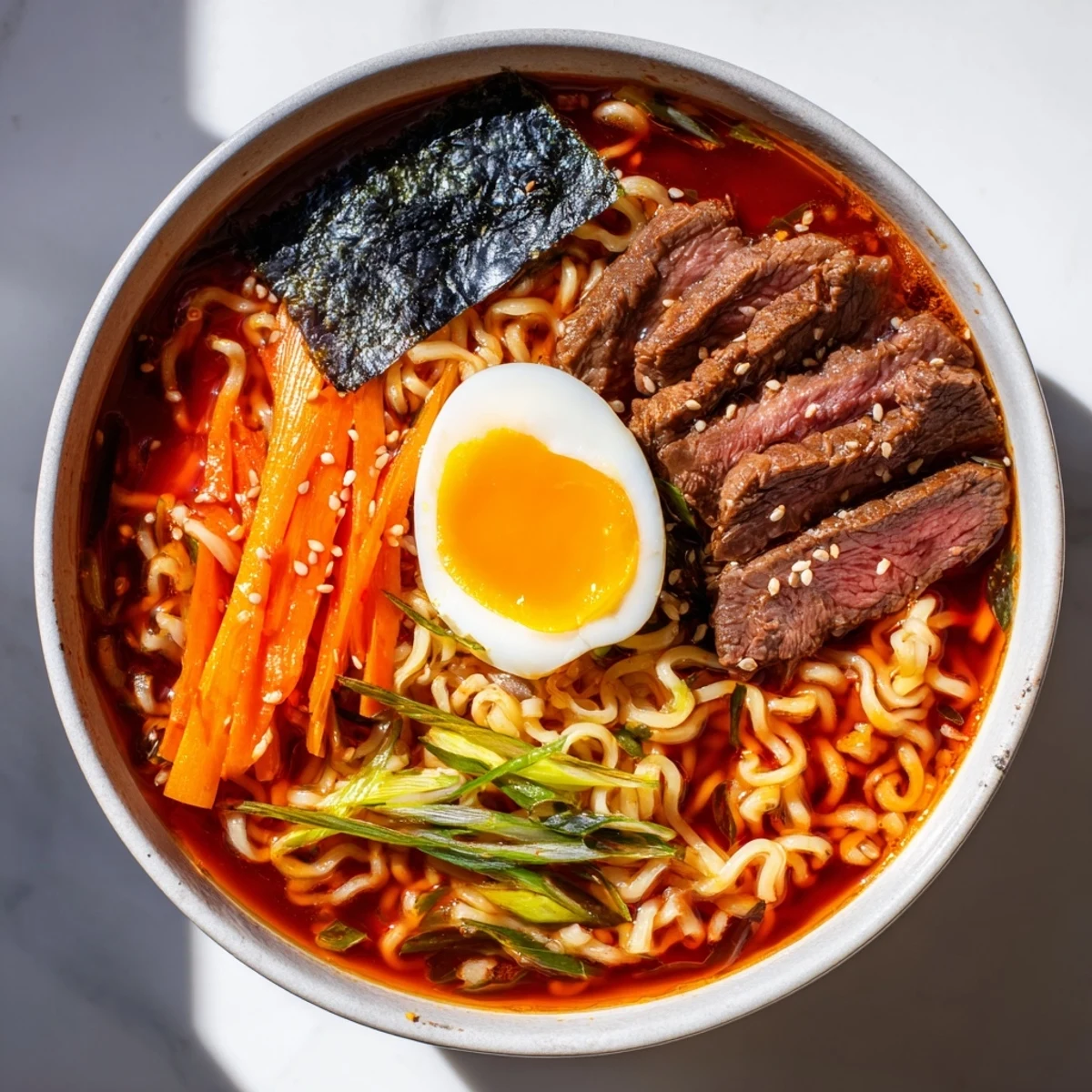
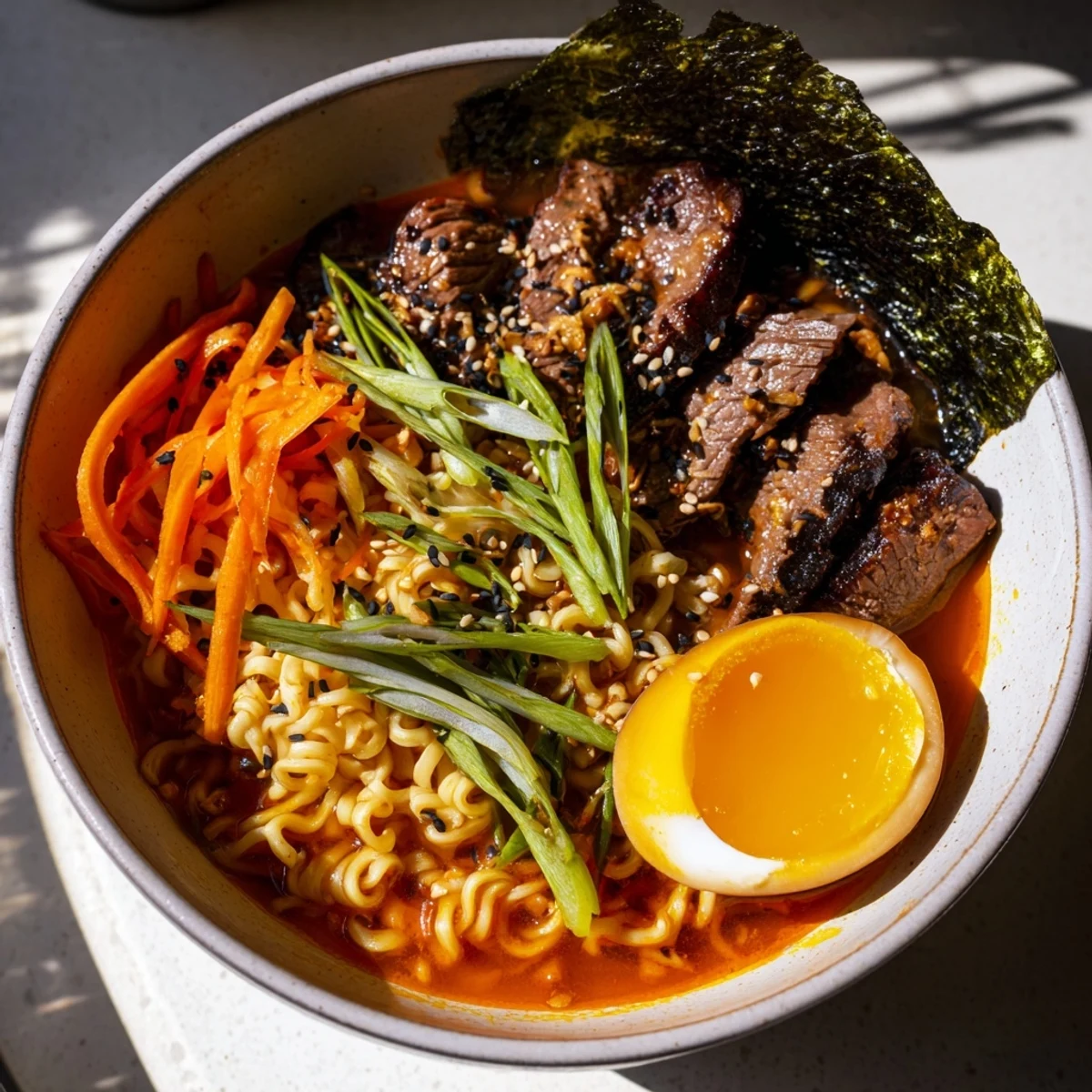
 Enjoy a rich bowl of spicy beef ramen combining thinly sliced marinated beef with a savory, warming broth. Accompanied by chewy noodles, fresh greens, and a soft boiled egg, this dish offers layers of bold flavors and comforting textures. The broth balances garlic, ginger, and chili paste, creating a spicy yet mellow base. Ideal for satisfying weeknight meals or impressing guests, this dish blends traditional Japanese techniques with Korean chili for a unique twist.
There's something about a steaming bowl of spicy ramen that stops time. My first real attempt at making it came on a freezing night when I decided to skip ordering takeout and actually tackle the recipe myself, armed with nothing but confidence and a bottle of gochujang I'd been saving. The moment that marinated beef hit the hot pan and the kitchen filled with smoke and umami, I knew I'd stumbled onto something worth repeating.
I made this for friends who claimed they only ate "simple food," and watching them slurp through a second bowl while asking for the recipe felt like a small victory. The spice sneaks up on you in the best way, and somehow a warm bowl makes even a terrible day feel manageable.
Ingredients
- Flank steak or sirloin, thinly sliced: The thinness matters here—you want it to cook through in seconds rather than becoming chewy.
- Soy sauce, sesame oil, and black pepper: These three transform ordinary beef into something with real flavor before it even hits the pan.
- Vegetable oil: High heat needs a neutral oil that won't smoke and distract from what you're building.
- Garlic and ginger: Mince them fine; you want them to dissolve into the broth rather than announce themselves as chunks.
- Gochujang or Sriracha: This is where the personality comes in—gochujang gives deeper, fermented heat while Sriracha is sharper and more immediate.
- Miso paste: The secret depth that makes people ask what your secret ingredient is.
- Soy sauce, mirin, and rice vinegar: These balance the heat with sweetness and acidity so nothing tastes one-dimensional.
- Beef or chicken stock: Quality matters here since the broth is what you're actually eating.
- Fresh ramen noodles: They cook faster and have better texture than dried; if you must use dried, check the package timing carefully.
- Large eggs: The 6–7 minute window is crucial—any longer and the yolk sets, any shorter and it's too runny.
- Baby spinach or bok choy: A moment in the broth wilts them perfectly; don't skip the greens, they matter.
- Carrot, scallions, and chili: These aren't just garnish—they add freshness and textural contrast to every spoonful.
- Toasted sesame seeds and nori: The finishing touch that makes it look intentional rather than thrown together.
Instructions
- Marinate the beef while you work:
- Toss your sliced beef with soy sauce, sesame oil, and black pepper in a bowl and let it sit. This isn't a long marinate—15 minutes is plenty—but it seasons the meat through and through.
- Boil the eggs with precision:
- Bring water to a rolling boil, gently lower in the eggs, and set a timer for exactly 6 minutes and 30 seconds. When time's up, transfer them straight to an ice bath; the cold stops the cooking immediately and makes peeling easier than you'd expect.
- Build the broth from the ground up:
- Heat oil, add garlic and ginger, let them bloom for a minute until your kitchen smells alive. Stir in the chili paste, miso, soy sauce, mirin, and vinegar—let them cook for a moment so the flavors marry. Then pour in your stock and water and let it simmer gently, never at a aggressive boil, for 10 minutes.
- Sear the beef quickly:
- Get a skillet screaming hot, then add the beef in a single layer. It needs only 2–3 minutes per side; you're looking for a light brown, not gray meat. Overcooked beef is tough beef.
- Cook your noodles to the package spec:
- Fresh ramen takes 3–4 minutes, dried takes longer. Drain them well and divide among your bowls while they're still warm.
- Wilt the greens in the broth:
- Add them directly to the pot for just 1–2 minutes, then fish them out with tongs. This keeps them tender instead of mushy.
- Assemble with intention:
- Ladle the hot broth over the noodles, then arrange the beef, greens, carrot, and a halved egg on top. Scatter sesame seeds, chili slices, and nori strips over everything. The heat from the broth will warm all your toppings through.
 Pin It
 The first time someone told me this ramen made them feel cared for, I realized cooking isn't really about technique—it's about those 10 minutes simmering the broth while thinking about who you're making it for.
Controlling the Heat Level
Spice is personal, and this recipe respects that. Start with 1 tablespoon of gochujang and taste the broth before committing to more; you can always add heat but you can't take it back. If you overshoot, a splash of mirin or a dollop of sour cream stirred into individual bowls helps tame the burn.
Making It Vegetarian or Vegan
Swap the beef for pressed tofu marinated in the same seasonings, and use vegetable stock instead of beef stock. The tofu won't brown like meat, but if you pan-fry it until the edges crisp, it gives you the textural contrast you need. For vegan, skip the egg entirely or use a chickpea-based substitute if you have one on hand.
Timing and Make-Ahead Strategies
The beauty of ramen is that most components can be prepped ahead. Boil your eggs in the morning, make the broth the day before, and slice your beef whenever suits you. When people are hungry, you're just reassembling and warming things through. This meal doesn't demand your full attention at the last second; it demands your presence when you serve it.
- The broth keeps for 4 days in the refrigerator and tastes sharper on day two or three.
- Soft-boiled eggs stay good for 3 days; keep them unpeeled if you're storing them longer.
- Slice your beef right before cooking so it doesn't dry out sitting in the fridge.
 Pin It
 This ramen reminds me that some of the best meals don't come from complicated techniques—they come from respecting good ingredients and taking time to build flavor. Make it whenever you need something warm, comforting, and entirely within reach.
Recipe Questions & Answers
- → How do I marinate the beef for this dish?
-
Combine thinly sliced beef with soy sauce, sesame oil, and freshly ground black pepper. Let it sit while preparing the broth to maximize flavor infusion.
- → What’s the best way to cook the soft boiled eggs?
-
Boil the eggs gently for 6 to 7 minutes, then transfer to an ice bath to stop cooking and ensure a tender yolk.
- → Can I substitute the greens in the broth?
-
Yes, baby spinach or bok choy both work well, added briefly to retain their texture and color.
- → How should the broth be prepared for maximum flavor?
-
Sauté garlic and ginger, then simmer with gochujang, miso, soy sauce, mirin, rice vinegar, and stock to develop a balanced spicy, umami-rich broth.
- → What type of noodles suits this dish best?
-
Fresh ramen noodles are preferred for texture and flavor, but dried noodles can be used if cooked according to package instructions.
- → Can I adjust the spice level?
-
Absolutely, modify the amount of gochujang or Sriracha to suit your preferred heat intensity.