
 Pin It
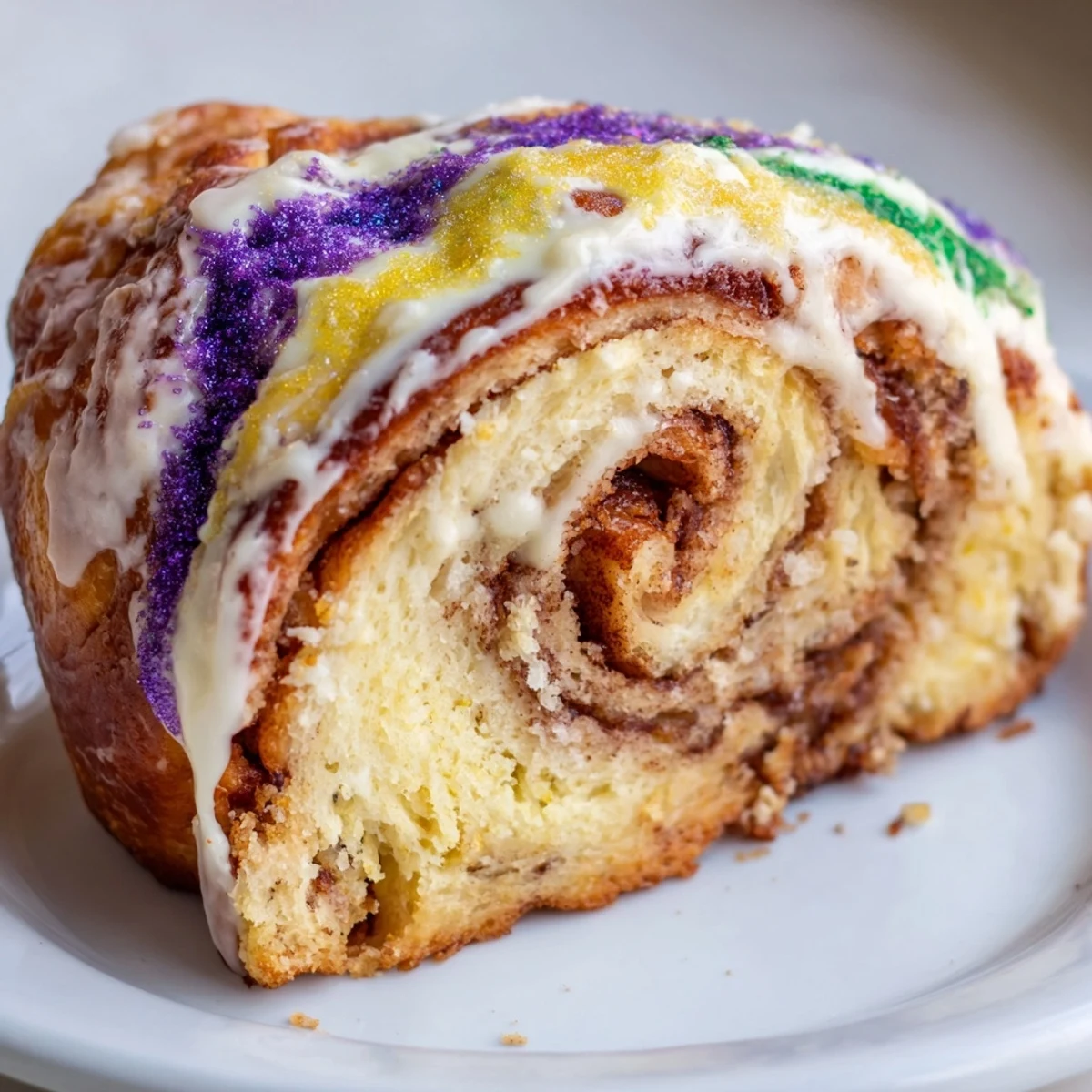
 This traditional King Cake combines tender brioche dough with a generous cinnamon-sugar filling, crowned with smooth vanilla icing and festive colored sugars. The dough rises twice—once after kneading and again after shaping into a ring—creating a light, fluffy crumb. Baked until golden brown, it's drizzled with icing while still warm for the glaze to set beautifully. Perfect for celebrations, with optional variations using cream cheese or pecans.
The first time I made King Cake, my kitchen filled with the sweet aroma of cinnamon and lemon that transported me straight to New Orleans. Though I had never been to Mardi Gras, the rhythmic process of kneading the brioche dough became its own celebration, flour dusting my counters like confetti. My hands worked the butter into the dough while jazz played softly in the background, creating a moment of connection to a tradition hundreds of miles away.
Last February, I brought this king cake to our neighborhood potluck where everyone was shivering through a particularly cold winter. The bright colors and warm cinnamon swirl seemed to break through the gray mood instantly. When my neighbor Luis found the hidden bean, his genuine surprise and immediate donning of an imaginary crown turned our simple gathering into something memorable.
Ingredients
- Active Dry Yeast: Make sure your milk is warm but not hot (around 110°F) when blooming the yeast, as I once killed the yeast with milk that was too hot and ended up with a dense, flat cake that nobody wanted to claim.
- Lemon Zest: While listed as optional, this bright note cuts through the richness and creates depth without screaming lemon, something I only discovered after a happy accident when making this for the fifth time.
- Brown Sugar: The molasses in brown sugar creates a moister, more flavorful filling than granulated sugar, a lesson I learned from my Louisiana-born neighbor who scolded me gently for using white sugar in my first attempt.
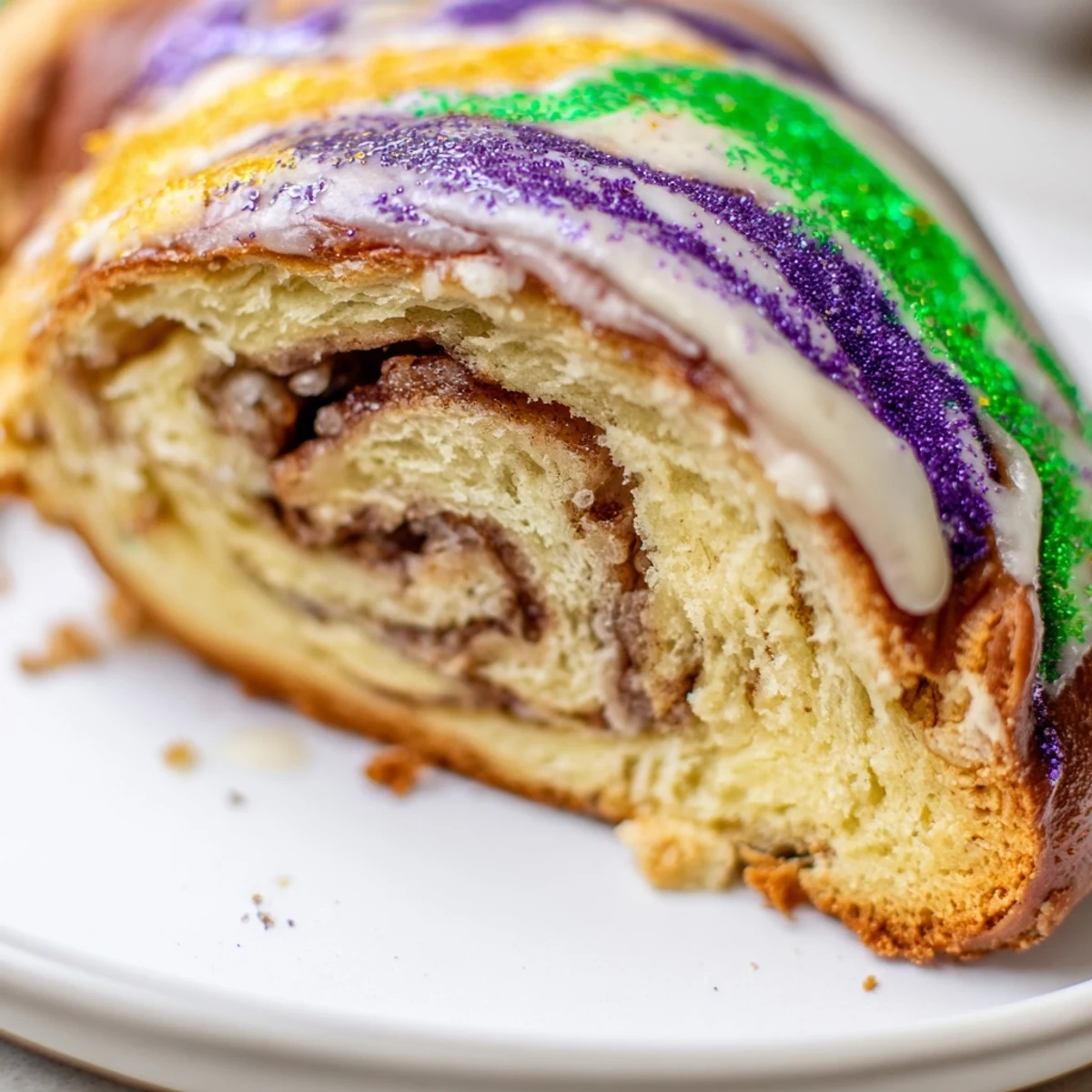
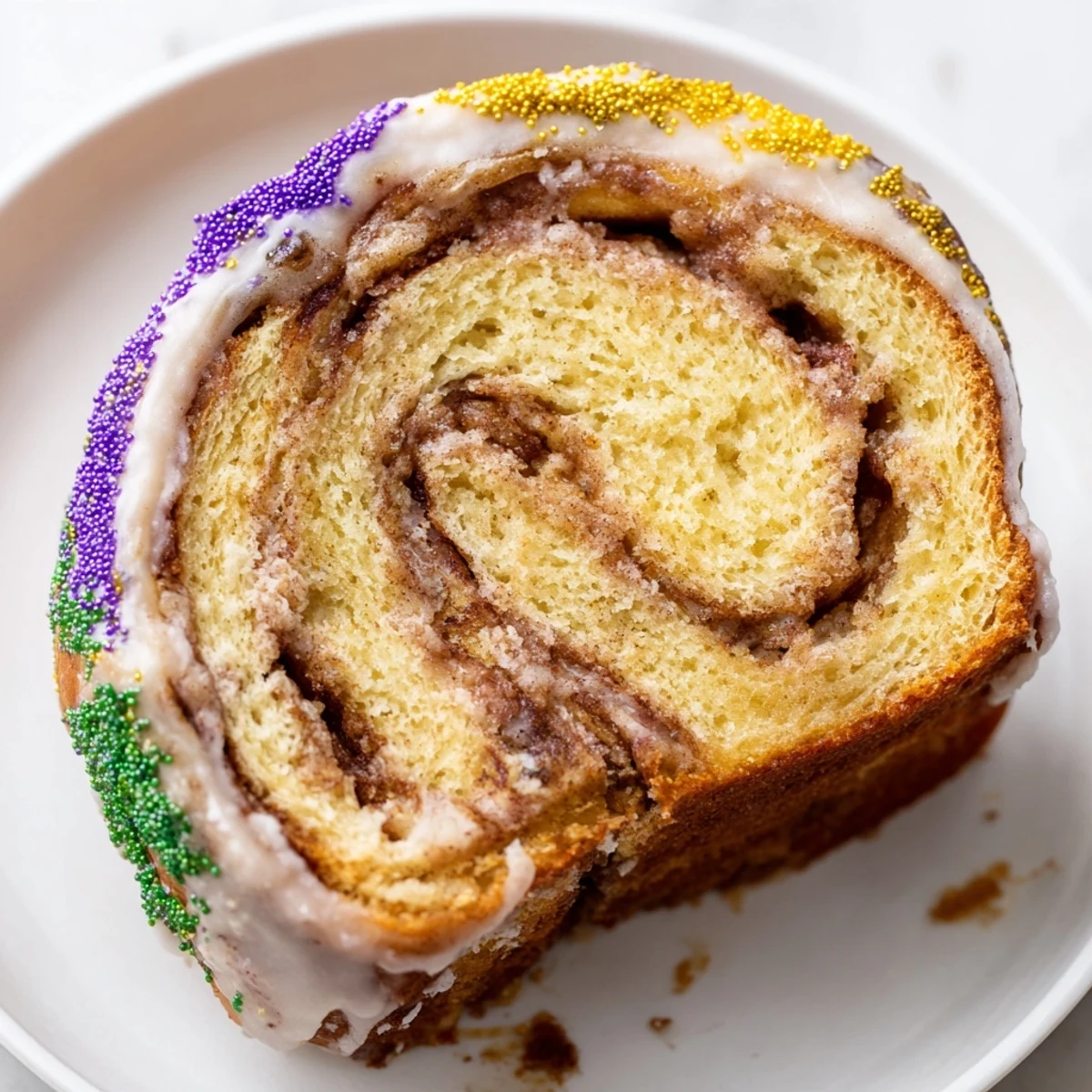
- Colored Sugars: Traditional Mardi Gras colors of purple (justice), green (faith), and gold (power) make this cake instantly recognizable, and I keep these special sugars in airtight containers to use year after year.
Instructions
- Wake Up Your Yeast:
- Combine the warm milk, tablespoon of sugar, and yeast in a large bowl, then watch for the magic to happen. Within 10 minutes, the mixture should be foamy and fragrant, a sign that your dough will rise beautifully.
- Create Your Dough Base:
- Add remaining sugar, eggs, butter, vanilla, salt, and that wonderful lemon zest to your yeasty mixture. I like to beat the eggs slightly before adding them to help them incorporate more evenly.
- Build The Structure:
- Gradually add your flour, allowing each addition to incorporate before adding more. The dough will transform before your eyes from a sticky mess to a soft, cohesive ball that pulls away from the sides of the bowl.
- First Rise Magic:
- Place your dough in a greased bowl, cover with a damp cloth, and let it rest in a warm spot. I place mine near the preheating oven where the ambient warmth helps it double in size, transforming the tight dough into something pillowy and alive.
- Create Cinnamon Bliss:
- While waiting, mix your butter, brown sugar, and cinnamon into a spreadable paste that will become the soul of your cake. I like to use a fork to really incorporate the ingredients, ensuring no pockets of dry sugar remain.
- Roll With Purpose:
- On a floured surface, roll your dough into a large rectangle about 1/4-inch thick. Keep your movements confident and even, rotating the dough occasionally to maintain the shape.
- Layer In Flavor:
- Spread your cinnamon filling evenly across the dough, leaving that crucial border to ensure a good seal. The aroma that rises from the warm dough meeting the spicy-sweet filling is your first reward.
- Form The Ring:
- Roll the dough tightly from the long edge, pinching to seal, then shape into a ring on your prepared baking sheet. When joining the ends, I use a bit of water on my fingertips to help them stick together properly.
- Second Rise Patience:
- Cover your ring loosely and let it rise again until noticeably puffy. During this time, I prepare the icing and get my colored sugars ready, building anticipation for the final decorated cake.
- Golden Perfection:
- Bake in your preheated oven until the cake becomes a beautiful amber color and your kitchen fills with an irresistible aroma. You may need to tent with foil halfway through if its browning too quickly.
- Cooling Interlude:
- Allow the cake to cool on a wire rack for at least 20 minutes before icing. This patience prevents the icing from melting completely into the cake, though a little absorption creates a wonderful glaze effect.
- Icing Artistry:
- Whisk together your powdered sugar, vanilla, and just enough milk to create a thick but pourable icing. I test the consistency by lifting my whisk - the icing should fall in ribbons that hold their shape for a moment before melting back.
- Festive Finish:
- Working quickly, drizzle your icing over the cake and immediately sprinkle with alternating sections of purple, green, and gold sugars. The contrast of the white icing against the colored sugars creates that iconic Mardi Gras look that brings instant joy.
 Pin It
 When my daughter came home from college unexpectedly one weekend during Mardi Gras season, I quickly threw together this king cake as a welcome home surprise. As we sat at the kitchen table, still warm slices before us, she told me about her struggles with her biology major while absently picking at the colored sugars. By the time we finished our slices, she was laughing about lab mishaps and had forgotten her academic worries, proving once again that shared food creates space for the conversations that matter most.
Make-Ahead Options
I discovered the convenience of preparing this dough the night before quite by accident when an unexpected phone call interrupted my baking. After the first rise, I punched down the dough, wrapped it tightly in plastic, and refrigerated it overnight. The slow, cold fermentation actually enhanced the flavor complexity, adding subtle notes that werent there in my same-day versions. Now I often deliberately make the dough ahead, letting it come to room temperature for about 30 minutes before rolling out with the filling.
Variations Worth Trying
Through years of making this cake, Ive experimented with several delicious variations that still honor the tradition. A cream cheese filling (8 oz cream cheese, 1/2 cup sugar, and a splash of vanilla) spread over the cinnamon layer adds a cheesecake-like dimension that converts even the most traditional purists. For a praline-inspired twist, I sometimes add 1 cup of finely chopped toasted pecans to the filling and a splash of bourbon to the icing, creating a more adult interpretation that still maintains the festive spirit.
Serving and Storage Wisdom
King cake is at its absolute prime within the first 24 hours of baking, when the contrast between the slightly crisp exterior and tender, swirled interior is most pronounced. If serving the next day, I briefly warm individual slices for 10 seconds in the microwave, which revives the texture and releases the cinnamon aroma anew.
- For storage beyond two days, slice the cake and freeze portions individually wrapped in plastic and foil, where theyll keep for up to a month without flavor loss.
- When serving at a gathering, provide small cards explaining the tradition of the hidden trinket to include guests who might not be familiar with the custom.
- Consider serving with coffee spiked with a hint of chicory for an authentic New Orleans pairing that balances the cakes sweetness perfectly.
 Pin It
 This king cake has become more than just a recipe in my collection - its a marker of the season, a reason to gather, and a small tradition that brings unexpected joy. Whether youre celebrating Mardi Gras or simply need a moment of festivity in an ordinary week, this colorful creation carries a bit of magic in each slice.
Recipe Questions & Answers
- → How long does the cake take from start to finish?
-
Total time is approximately 3 hours, including two rising periods. Active preparation and baking take about 65 minutes, with rising times accounting for the remainder.
- → Can I prepare the dough ahead of time?
-
Yes, you can refrigerate the shaped dough overnight. Let it come to room temperature and complete the final rise before baking. This actually enhances flavor development.
- → What's the significance of the hidden object?
-
Traditionally, a plastic baby or dried bean is hidden inside the cake. Whoever finds it is crowned king or queen of the celebration. Always warn guests before serving.
- → How should I store leftover cake?
-
Store covered at room temperature for up to 2 days. The cake stays moist and fresh when kept in an airtight container away from direct sunlight.
- → Can I make substitutions to the filling?
-
Absolutely. Try cream cheese mixed with cinnamon-sugar for tanginess, or spread chopped pecans over the filling for added texture and nuttiness.
- → Why is my dough too sticky to handle?
-
Ensure milk is warm (110°F) to activate yeast properly and help dough develop elasticity. Knead for the full 8-10 minutes. If still sticky, dust with minimal flour while working.