
 Pin It
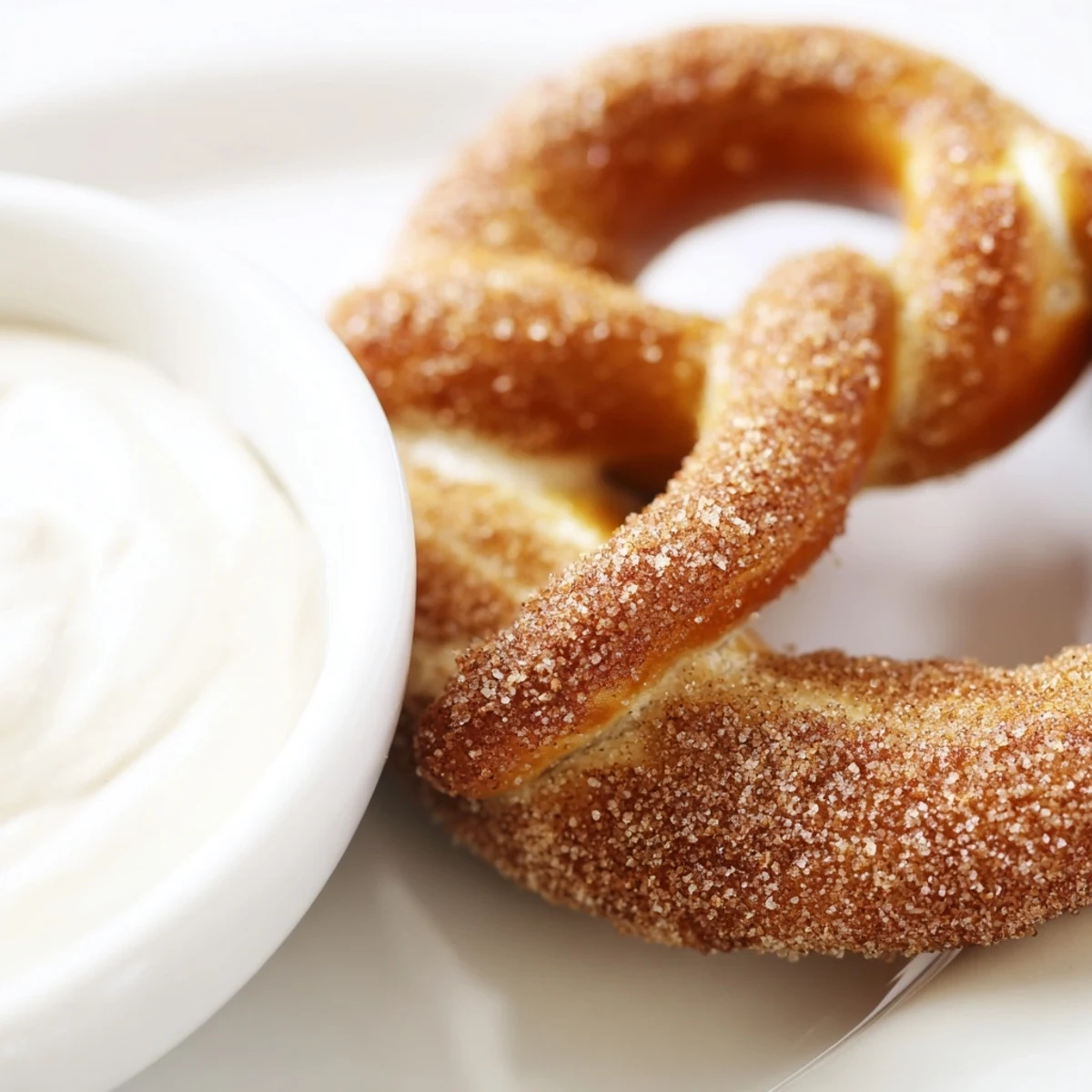
 Warm, pillowy-soft pretzels are shaped by hand and bathed in a baking soda solution before baking to achieve a golden crust. The pretzels are then brushed with melted butter and coated in a fragrant cinnamon sugar mixture. A luscious vanilla cream cheese dip complements the sweet, soft bites, making it an ideal treat for snacking or dessert. The dough requires rising time to develop elasticity and flavor, resulting in tender, fluffy textures with a perfect balance of buttery and sweet cinnamon notes.
There's something about the aroma of cinnamon and sugar hitting warm bread that stops everyone in their tracks. I learned this the hard way one Sunday afternoon when I decided to make soft pretzels for no reason other than restlessness—I didn't expect my neighbor to knock on the door ten minutes after they came out of the oven, drawn by the smell alone. These pillowy-soft pretzels coated in fragrant cinnamon sugar became my answer to cravings that don't fit neatly into breakfast, dessert, or snack time. They're just honest comfort, warm in your hands.
I remember making these for a weeknight gathering where everyone was supposed to bring something, but I showed up with warm pretzels instead, and suddenly everyone forgot about the vegetable platter. My partner stood by the oven waiting for them to bake, dipping one in the cream cheese dip after another, and I realized these pretzels had become something we made when we wanted to feel like we were taking care of each other.
Ingredients
- Warm water (1 ½ cups): The temperature matters more than you'd think—too hot and you'll kill the yeast, too cool and nothing happens. Aim for that warm-bath feeling on your wrist.
- Active dry yeast (2 ¼ teaspoons): This is your leavening agent, and watching it foam up in the water never stops being satisfying.
- Granulated sugar (1 tablespoon in dough, ½ cup in coating): The small amount in the dough feeds the yeast and adds subtle sweetness; the coating sugar is where the magic happens.
- All-purpose flour (4 cups): This is your structural foundation—don't sift it unless you're feeling fussy, but do measure it by weight if you have a scale.
- Salt (1 teaspoon): Enhances all flavors and strengthens the gluten network.
- Unsalted butter (6 tablespoons total): Use it melted in the dough and again to brush the warm pretzels so the cinnamon sugar sticks.
- Baking soda (½ cup): This alkaline bath creates that distinctive pretzel crust and deep golden color.
- Ground cinnamon (1 ½ teaspoons): Toast your own if you can—it smells warmer and tastes more alive than pre-ground.
- Cream cheese (4 oz) and butter (2 tablespoons): The dip base that makes these feel indulgent without being heavy.
- Powdered sugar (1 cup): Sweetens the dip and dissolves silently into creamy richness.
- Vanilla extract (½ teaspoon): A whisper of vanilla that elevates the entire experience.
- Milk (2 tablespoons): Adjusts the dip consistency to perfect—creamy but not thick.
Instructions
- Wake up your yeast:
- Pour warm water into your bowl—it should feel like a comfortable bath temperature on your wrist. Sprinkle the yeast and sugar over it and let it sit for five minutes. You'll see it transform into a foamy, alive mixture that smells faintly of bread. This is the moment you know your yeast is ready to work.
- Bring the dough together:
- Add your flour, salt, and melted butter to the foamy mixture. Stir with a wooden spoon until you have a rough, shaggy mass that looks like it barely holds together. Don't overthink it—dough comes together through kneading, not mixing.
- Develop the dough through kneading:
- Turn everything onto a floured surface and knead for five to seven minutes, pushing the dough away from you with the heel of your hand and folding it back over itself. The dough will go from sticky and rough to smooth and elastic, almost silky under your palms. When you poke it gently, it should spring back.
- Let it rise with patience:
- Shape the dough into a loose ball, place it in a greased bowl, and cover with a towel or plastic wrap. Find a warm corner of your kitchen—above a heating vent, in a turned-off oven with the light on, anywhere cozy. In about an hour, it will double in volume and feel pillowy when you poke it.
- Prepare for the bake:
- Heat your oven to 450°F and line two baking sheets with parchment paper. Fill a large pot with nine cups of water and bring it to a rolling boil, then whisk in the baking soda—it will foam dramatically, so be ready. This is your transformation bath.
- Shape your pretzels:
- Punch down the dough gently to release gas bubbles. Divide it into eight equal pieces and roll each into a rope about twenty inches long. Don't rush this—the dough wants to contract, so let it rest between rolls if it fights you. Then shape each rope into a pretzel by making a U, crossing the ends over the top, and tucking them under where the U closes.
- The critical bath:
- Working with one or two pretzels at a time, carefully lower them into the boiling baking soda water using a slotted spatula. They'll sink, then float to the surface after twenty to thirty seconds—that's your signal to remove them. The bath transforms the outside, creating that characteristic chewy crust and deep color. Place each one on your parchment-lined baking sheet.
- Bake until golden:
- Slide the baking sheets into the oven and bake for twelve to fifteen minutes. You're looking for a deep golden-brown color, almost mahogany in places. The kitchen will smell incredible, and your patience will feel worth it.
- Finish with the coating:
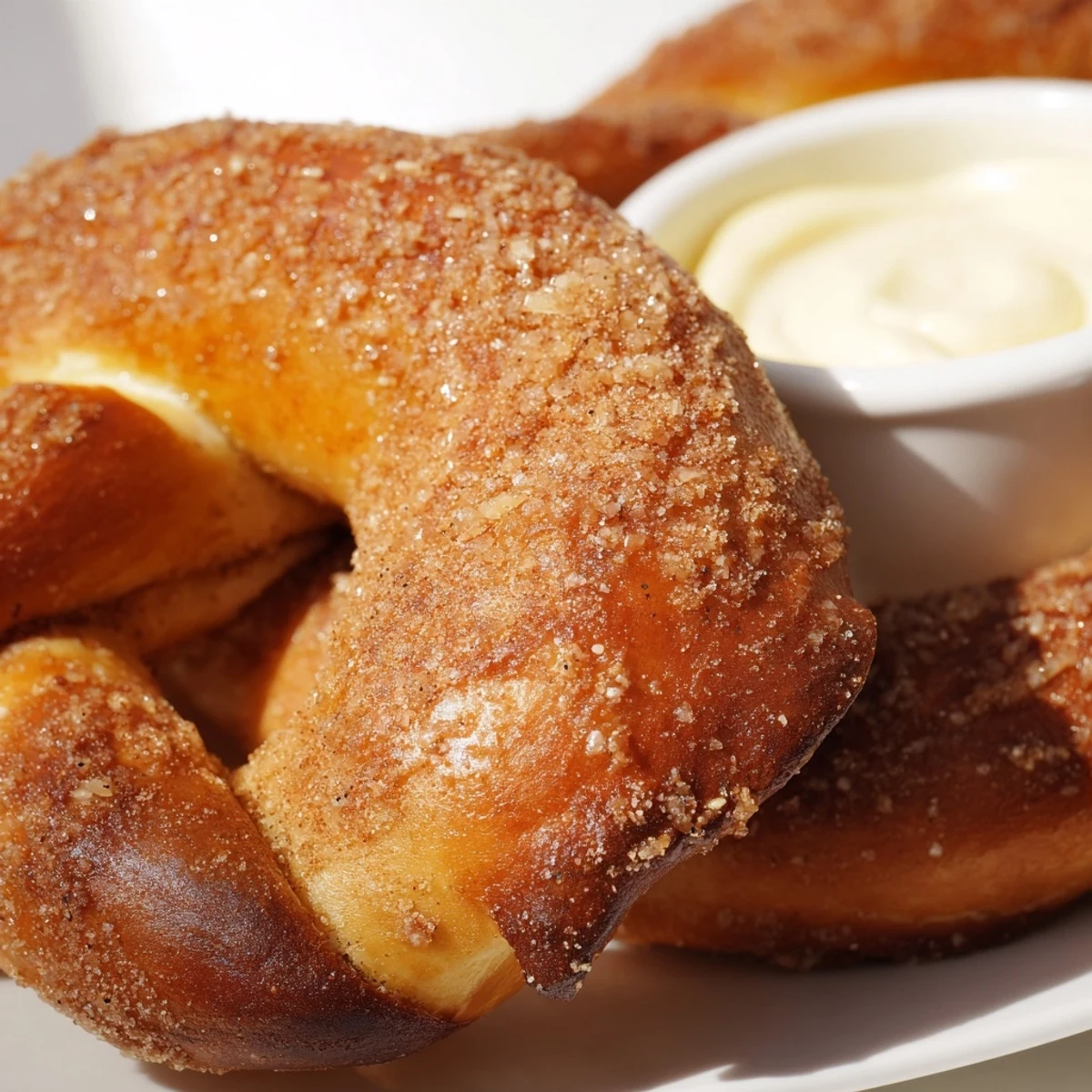
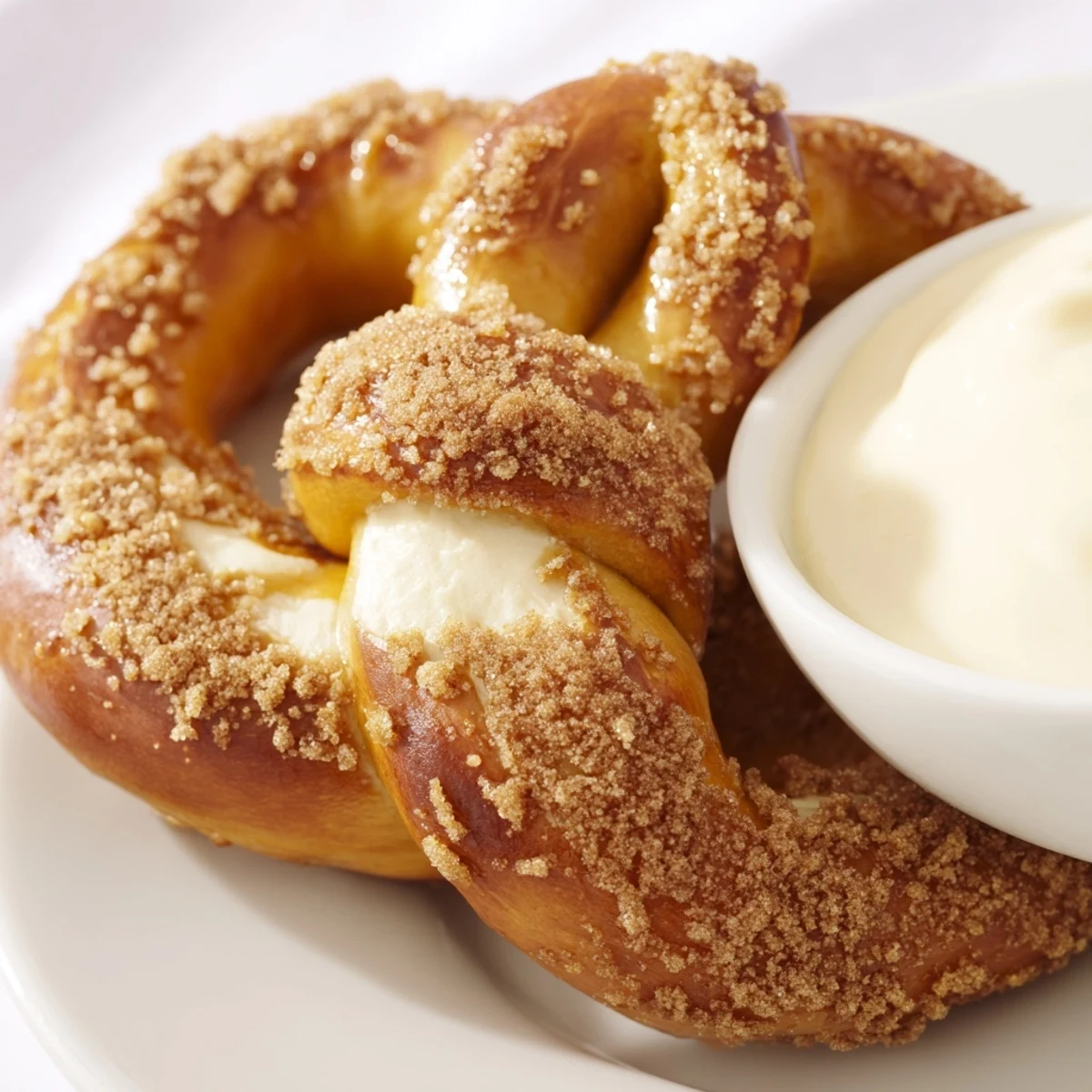
- While the pretzels are still warm, brush each one generously with melted butter. Mix your cinnamon and sugar in a shallow bowl and toss each pretzel in the mixture, or sprinkle it on if you prefer control. The warm butter makes the coating cling like it was meant to be there.
- Build your dip:
- Beat softened cream cheese and butter together until smooth and combined. Add powdered sugar, vanilla, and milk, then beat until the mixture is light and creamy. Taste it—you want that sweet vanilla presence without overwhelming the richness of the cream cheese.
 Pin It
 My kids now request these for their school bake sale, which caught me off guard because I made them mostly for myself. Watching them carefully arrange these cinnamon-sugar pretzels on a plate, explaining to their friends why these were different from store-bought, reminded me that the best recipes are the ones that make people feel cared for. These pretzels do that.
Why This Recipe Works
The magic of soft pretzels lives in understanding yeast and how a simple alkaline bath changes everything. Most home bakers skip the baking soda step because it seems unnecessary, but that's where the pretzel becomes a pretzel—without it, you're just making shaped bread rolls. The baking soda raises the pH of the dough's surface, which deepens browning and creates that slightly chewy, distinct texture. It's a small step that makes all the difference.
The Cinnamon Sugar Marriage
Coating warm bread with melted butter and cinnamon sugar is one of those simple combinations that feels like it was always meant to exist. The warm butter acts as a binder, holding the crystals in place while they dissolve slightly into sticky, fragrant sweetness. If you've ever wondered why bakery cinnamon sugar tastes different from what you make at home, it's usually because they do this final brush-and-coat step while everything is hot.
Storing and Reheating
These pretzels are best warm, straight from the oven, but they survive the day wrapped loosely in a cloth towel at room temperature. The next morning, wrap them in foil and warm them in a 300°F oven for about eight minutes—they won't be quite as pillowy, but they'll taste fresh again. I've never had leftover dip because cream cheese mixtures disappear, but if you do, keep it covered in the refrigerator and stir in a splash of milk before serving if it's thickened up.
- Fresh pretzels deserve to be eaten within a few hours of baking when the cinnamon sugar coating is still distinct and the interior is still tender.
- Don't refrigerate the baked pretzels—it accelerates staling far faster than leaving them at room temperature.
- The dip is wonderful at room temperature or slightly chilled, so make it whenever suits your timeline.
 Pin It
 These soft pretzels have become my quiet ritual on afternoons when the house feels too quiet or when someone needs comfort that words can't deliver. There's something about making bread—really making it, not buying it—that feels like a small act of devotion.
Recipe Questions & Answers
- → What is the purpose of the baking soda bath?
-
Dipping pretzels in a baking soda bath before baking creates a chewy crust and deep golden color typical of soft pretzels.
- → Can I prepare the dough ahead of time?
-
Yes, the dough can be prepared and stored in the refrigerator overnight to develop more flavor and ease shaping the next day.
- → How can I make the cinnamon sugar coating more flavorful?
-
Adding a pinch of nutmeg to the cinnamon sugar enhances the aroma and depth of the coating.
- → Is there a dairy-free option for the dip and coating?
-
Yes, substituting dairy-free butter and cream cheese alternatives works well for a vegan-friendly version.
- → What is the best way to reheat these pretzels?
-
Reheat gently in a low oven to restore warmth and softness without drying them out.